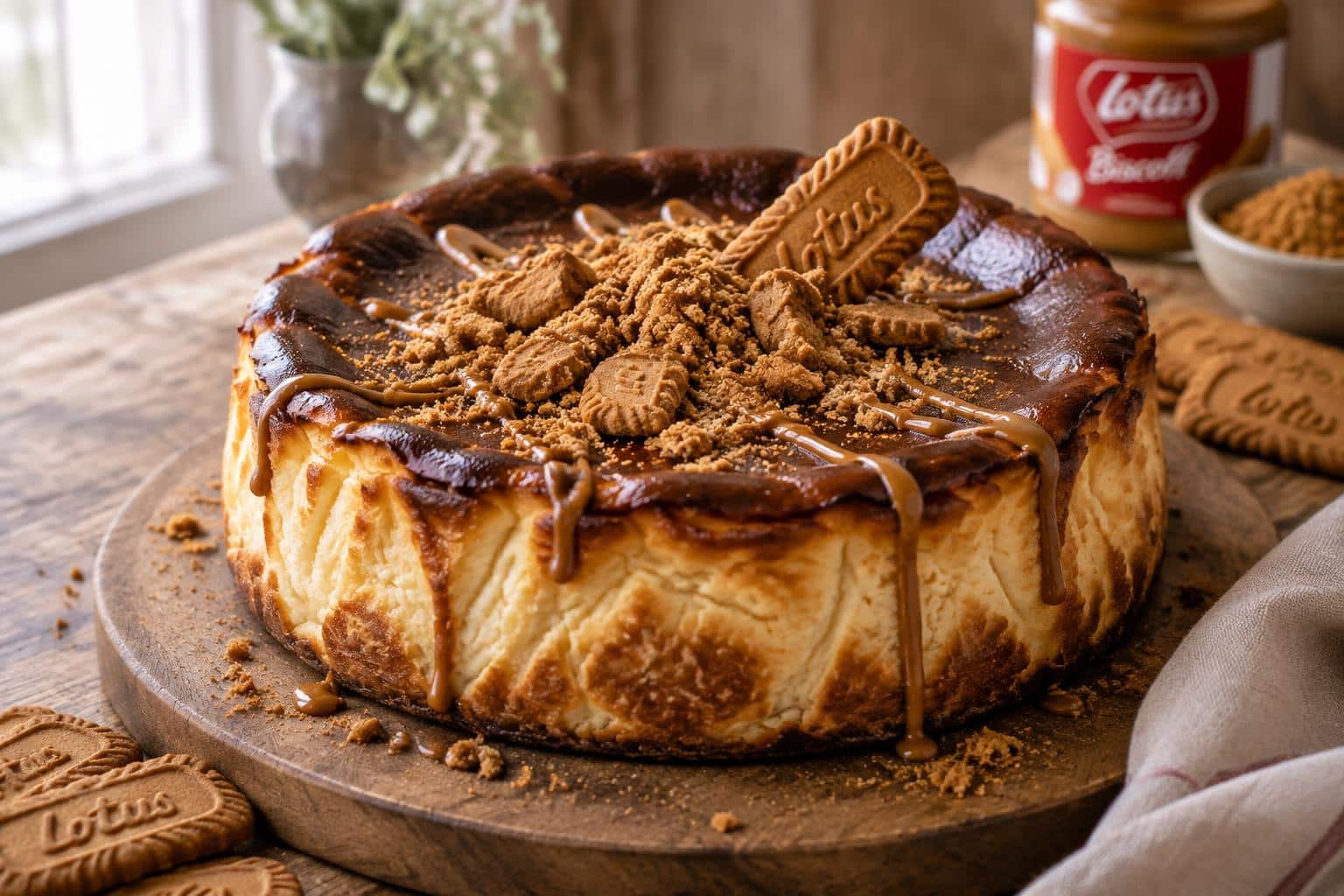
If you’re looking to impress with a dessert that’s both rich and uniquely flavored, this easy creamy Basque Biscoff cheesecake is your answer. Combining the buttery caramel notes of Biscoff cookies with the luscious texture of a Basque cheesecake creates a dessert you’ll want to make again and again.

Whether it’s for a special gathering or a cozy night in, this homemade treat is surprisingly simple to make and will quickly become a favorite in your dessert rotation. Let’s dive into everything you need to know to master this delightful Basque Biscoff cheesecake.
Why You’ll Love This Recipe
- Rich, creamy texture with a caramelized Basque-style crust.
- Unique Biscoff cookie flavor adds warmth and depth.
- Simple ingredients and straightforward baking process.
- Perfect balance of sweet and slightly burnt notes for complexity.
- Great make-ahead dessert that keeps well in the fridge.
Ingredients
Gather these ingredients to bring your Basque Biscoff cheesecake to life. The recipe uses common pantry staples and the star Biscoff cookies to create that signature flavor.
- 16 ounces cream cheese, softened
- 1 cup granulated sugar
- 4 large eggs
- 1 cup heavy cream
- 1 teaspoon vanilla extract
- 1/2 cup Biscoff cookie butter
- 1 cup crushed Biscoff cookies (for garnish and optional crust)
- 2 tablespoons all-purpose flour
- 1/4 teaspoon salt
Recipe Details
- Prep Time: 15 minutes
- Cook Time: 50 minutes
- Total Time: 1 hour 5 minutes
- Servings: 8
- Calories: Approximately 400 per serving
How to Make Easy Creamy Basque Biscoff Cheesecake – The Best Homemade Dessert You’ll Love
- Preheat your oven to 400°F. Line an 8-inch springform pan with parchment paper, making sure the paper extends about 2 inches above the rim to capture the cheesecake’s signature rustic edges.
- In a large bowl, beat the cream cheese and sugar together until completely smooth and creamy using a hand mixer at medium speed.
- Add eggs one at a time, beating well after each addition to ensure a smooth batter without lumps.
- Mix in the Biscoff cookie butter and vanilla extract until fully incorporated, then gently fold in the heavy cream, flour, and salt until the batter is silky and combined.
- Pour the batter into the prepared pan and smooth the top with a spatula. Optionally sprinkle crushed Biscoff cookies evenly on top for added texture and flavor.
- Bake at 400°F for about 50 minutes. The cheesecake should develop a deeply caramelized, dark golden-brown top and still jiggle slightly in the center when gently shaken.
- Turn off the oven and leave the cheesecake inside with the door slightly open for 30 minutes to cool gradually, enhancing the creamy texture.
- Remove from the oven and cool completely on a wire rack before refrigerating for at least 4 hours, preferably overnight. This resting time helps the flavors meld beautifully.
- When ready to serve, optionally drizzle with caramel sauce and sprinkle additional crushed Biscoff cookies for a stunning presentation.
Tips for the Best Results
- Use full-fat cream cheese and heavy cream for the creamiest texture.
- Don’t overmix once eggs are added to avoid incorporating too much air.
- Let the cheesecake cool slowly in the oven to prevent cracking.
- Line the pan with parchment that extends well above the rim for the classic Basque look.
- Chill the cheesecake thoroughly for the best slicing and flavor development.
Storage and Reheating
Store your Basque Biscoff cheesecake covered in the refrigerator for up to 4 days to maintain its creamy texture and flavor. For longer storage, wrap tightly and freeze for up to 2 months.
When ready to enjoy, thaw the cheesecake overnight in the fridge. You can serve it chilled or let it sit at room temperature for 15-20 minutes for a slightly softer texture. Reheating is not recommended as it may alter the creamy consistency.
Frequently Asked Questions
Can I use a different cookie butter instead of Biscoff?
Yes, you can substitute with any speculoos or cinnamon-flavored cookie butter. However, Biscoff cookie butter is recommended to achieve the authentic caramelized flavor that pairs beautifully with the Basque cheesecake style.
Do I need a springform pan for this cheesecake?
While a springform pan is ideal for easy removal, you can use a regular cake pan lined very well with parchment paper. Just be extra careful when removing the cheesecake to avoid breakage.
Why does the cheesecake have a burnt top?
The burnt, deeply caramelized top is a hallmark of Basque cheesecake. This unique crust adds a slightly smoky flavor and contrasts the creamy interior, making the dessert more complex and delicious.
Can I make this cheesecake gluten-free?
Yes, use gluten-free Biscoff-style cookie butter and gluten-free crushed cookies for garnish. Make sure the flour you use is a gluten-free blend suitable for baking to keep the texture consistent.