
If you have ever wanted to experience the vibrant flavors and comforting warmth of traditional Chinese noodle soup, the Yunnan Rice Noodles Soup Recipe is your perfect gateway. Originating from the picturesque Yunnan province, this soup combines tender pork or chicken with chewy rice noodles, tangy pickled mustard greens, and refreshing bean sprouts, all bathed in a richly flavored broth. Whether you’re craving a quick weeknight supper or a soul-soothing dish to impress friends, this recipe brings together simple ingredients in a way that’s both nourishing and exciting.

Ingredients You’ll Need
The beauty of the Yunnan Rice Noodles Soup Recipe lies in its simplicity. Each ingredient plays a vital role in layering flavors, textures, and even colors, creating a bowl that’s as balanced as it is delicious.
- 7 ounces dried rice noodles: Preferably Yunnan-style or wide rice noodles for that perfect chewy texture.
- 6 cups chicken or pork broth: Forms the flavorful base of your soup, rich and inviting.
- 1/2 pound thinly sliced pork loin or chicken breast: Adds tender protein that cooks quickly, soaking up all the broth flavors.
- 1/2 cup bean sprouts: Provides a fresh crunch that contrasts deliciously with the soft noodles.
- 1/4 cup pickled mustard greens, chopped: Brings a tangy brightness that livens up every spoonful.
- 1 tablespoon soy sauce: Adds umami depth and saltiness to the broth.
- 1 tablespoon Chinese black vinegar: Gives a subtle acidic kick that enhances the overall flavor.
- 2 teaspoons chili oil (optional): For those who love a gentle heat that warms the palate.
- 1 teaspoon sesame oil: Infuses a nutty aroma, rounding out the soup’s profile.
- 2 green onions, sliced: Fresh and slightly sharp, these brighten the dish at the end.
- 1 clove garlic, minced: Essential aromatic that infuses the broth with savory richness.
- Salt to taste: Balances and enhances all the flavors.
- Fresh cilantro and crushed peanuts for garnish (optional): Adds fresh herbal notes and textural contrast.
How to Make Yunnan Rice Noodles Soup Recipe
Step 1: Prepare the Noodles
Start by soaking your rice noodles in warm water for about 30 minutes if you are using dried noodles. This softens them just enough for the cooking process, ensuring they become tender and chewy without falling apart. If you have fresh noodles, give them a quick rinse to remove any excess starch. This simple step is the key to perfect noodle texture in your Yunnan Rice Noodles Soup Recipe.
Step 2: Build the Broth
In a large pot, bring your chicken or pork broth to a gentle boil. Add the minced garlic, soy sauce, and a pinch of salt to infuse the broth with savory layers. This mixture is the heart of your soup, so taking the time to get the base right will make all the difference in flavor.
Step 3: Cook the Meat
Once the broth is boiling, add the thinly sliced pork loin or chicken breast. Let it cook for 2 to 3 minutes until just done—quick cooking keeps the meat tender and juicy, perfectly complementing the noodles without overpowering the soup.
Step 4: Simmer and Prepare Noodles
After the meat is cooked, reduce the heat to let the broth simmer gently. Meanwhile, cook the soaked noodles separately in boiling water for 2 to 3 minutes until they reach the perfect tenderness. Drain them well—overcooked noodles can get mushy and lose the satisfying chew that makes this dish so special.
Step 5: Assemble Your Soup Bowls
Divide the cooked noodles evenly between your serving bowls. Add the cooked meat on top, then layer bean sprouts, pickled mustard greens, and sliced green onions. Ladle the steaming broth over the ingredients, bringing all the flavors together in one inviting bowl.
Step 6: Final Flavor Touches
Drizzle each bowl with Chinese black vinegar and sesame oil for that signature tang and nutty aroma. If you enjoy a bit of heat, add chili oil to taste. Don’t forget to sprinkle fresh cilantro and crushed peanuts if you’re using them—they provide an irresistible finishing touch to the Yunnan Rice Noodles Soup Recipe.
How to Serve Yunnan Rice Noodles Soup Recipe

Garnishes
Garnishes like fresh cilantro and crushed peanuts do more than just beautify the bowl—they add layers of texture and bursts of fresh, herbal flavor that elevate the entire soup. A little drizzle of black vinegar or chili oil right before serving amps up the complexity and makes each bite pop with excitement.
Side Dishes
This soup pairs beautifully with light sides such as steamed greens like bok choy, crispy spring rolls, or even a simple cucumber salad. These sides add variety and complementary flavors, turning your meal into a full, satisfying experience without being too heavy.
Creative Ways to Present
For a fun twist, serve the components separately and let everyone customize their own bowl. Lay out toppings like sautéed mushrooms, tofu cubes, extra chili oil, and pickled vegetables. This interactive approach makes enjoying the Yunnan Rice Noodles Soup Recipe even more memorable for family and friends.
Make Ahead and Storage
Storing Leftovers
If you have leftovers, store the soup and noodles separately in airtight containers. Keeping them apart prevents the noodles from soaking up too much broth and becoming mushy. This way, your soup will maintain its fresh texture and flavor the next day.
Freezing
The broth with cooked meat freezes well in portioned containers, but rice noodles do not freeze as successfully and may become overly soft when thawed. To enjoy the best quality, freeze only the broth and protein, preparing fresh noodles when ready to eat again.
Reheating
Reheat the broth gently on the stove until steaming hot. Heat noodles briefly in boiling water or microwave just to soften before combining. Add fresh garnishes after reheating to bring back that fresh, vibrant character that makes the Yunnan Rice Noodles Soup Recipe stand out.
FAQs
Can I use chicken instead of pork in the Yunnan Rice Noodles Soup Recipe?
Absolutely! Chicken breast works wonderfully and cooks quickly while absorbing the flavors beautifully. It’s a lighter alternative but equally delicious.
What if I can’t find Yunnan-style rice noodles?
No worries. You can use any wide rice noodles as a substitute. They might differ slightly in texture but still create a satisfying bowl of noodle soup.
Is it possible to make this dish vegetarian?
Yes, by using vegetable broth and replacing meat with tofu or mushrooms, you can enjoy a delicious vegetarian version that retains much of the original flavor and texture.
How spicy is the soup normally?
The traditional recipe includes optional chili oil, so the spice level is adjustable. Add as much or as little as you like to suit your taste.
Can I prepare this soup in advance for a party?
Definitely! Prepare the broth and toppings ahead of time, keeping noodles separate until serving. Let guests assemble their own bowls for a fun and interactive meal.
Final Thoughts
There’s something truly special about sitting down to a steaming bowl of Yunnan Rice Noodles Soup Recipe. It’s a celebration of fresh ingredients, bold flavors, and comforting textures all in one. I encourage you to try making this dish at home—you might just find your new favorite noodle soup to warm your heart and nourish your soul.
Print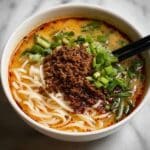
Yunnan Rice Noodles Soup Recipe
- Prep Time: 10 minutes
- Cook Time: 20 minutes
- Total Time: 30 minutes
- Yield: 2 servings
- Category: Main Course
- Method: Stovetop
- Cuisine: Chinese (Yunnan)
- Diet: Gluten Free
Description
Yunnan Rice Noodles Soup is a comforting and hearty Chinese noodle soup featuring wide rice noodles in a flavorful chicken or pork broth, topped with tender sliced meat, bean sprouts, pickled mustard greens, and fresh garnishes. This traditional Yunnan-style dish is perfect for a warming meal with bold, savory flavors balanced by tangy black vinegar and optional chili oil for spice.
Ingredients
Soup and Broth
- 6 cups chicken or pork broth
- 1 clove garlic, minced
- 1 tablespoon soy sauce
- Salt to taste
Noodles and Protein
- 7 ounces dried rice noodles (preferably Yunnan-style or wide rice noodles)
- 1/2 pound thinly sliced pork loin or chicken breast
Toppings and Garnishes
- 1/2 cup bean sprouts
- 1/4 cup pickled mustard greens, chopped
- 2 green onions, sliced
- 1 tablespoon Chinese black vinegar
- 1 teaspoon sesame oil
- 2 teaspoons chili oil (optional)
- Fresh cilantro for garnish (optional)
- Crushed peanuts for garnish (optional)
Instructions
- Prepare Rice Noodles: Soak the dried rice noodles in warm water for 30 minutes until softened. If using fresh noodles, simply rinse them to separate.
- Heat Broth: In a large pot, bring the chicken or pork broth to a gentle boil. Add the minced garlic, soy sauce, and a pinch of salt to enhance the flavor.
- Cook Meat: Add the thinly sliced pork or chicken to the boiling broth and cook for 2 to 3 minutes until just done, ensuring the meat remains tender and juicy.
- Simmer Broth: Reduce the heat to low to maintain a gentle simmer while you prepare the noodles and toppings.
- Cook Noodles: In a separate pot, cook the soaked rice noodles for 2 to 3 minutes until tender but still chewy, then drain them thoroughly to prevent sogginess.
- Assemble Bowls: Divide the cooked noodles evenly into serving bowls. Top with the cooked meat slices, bean sprouts, pickled mustard greens, and sliced green onions.
- Ladle Broth: Pour the hot broth over the noodles and toppings in each bowl to warm everything through.
- Add Finishing Touches: Drizzle each bowl with Chinese black vinegar, sesame oil, and chili oil if desired to add depth and spicy heat.
- Garnish and Serve: Optionally, garnish with fresh cilantro leaves and crushed peanuts for added texture and flavor. Serve the soup hot and enjoy.
Notes
- Yunnan-style rice noodles are thicker and chewier, but any wide rice noodle will work well.
- Adjust toppings based on availability; sautéed mushrooms, tofu, or bok choy are excellent additions for variety.
- For a richer broth, simmer with a piece of ginger and a dried chili to add extra depth of flavor before cooking the meat.
- If you prefer a vegetarian version, substitute vegetable broth and omit the meat, adding tofu or additional vegetables instead.
- Chili oil is optional; adjust the amount or omit to suit your spice preference.