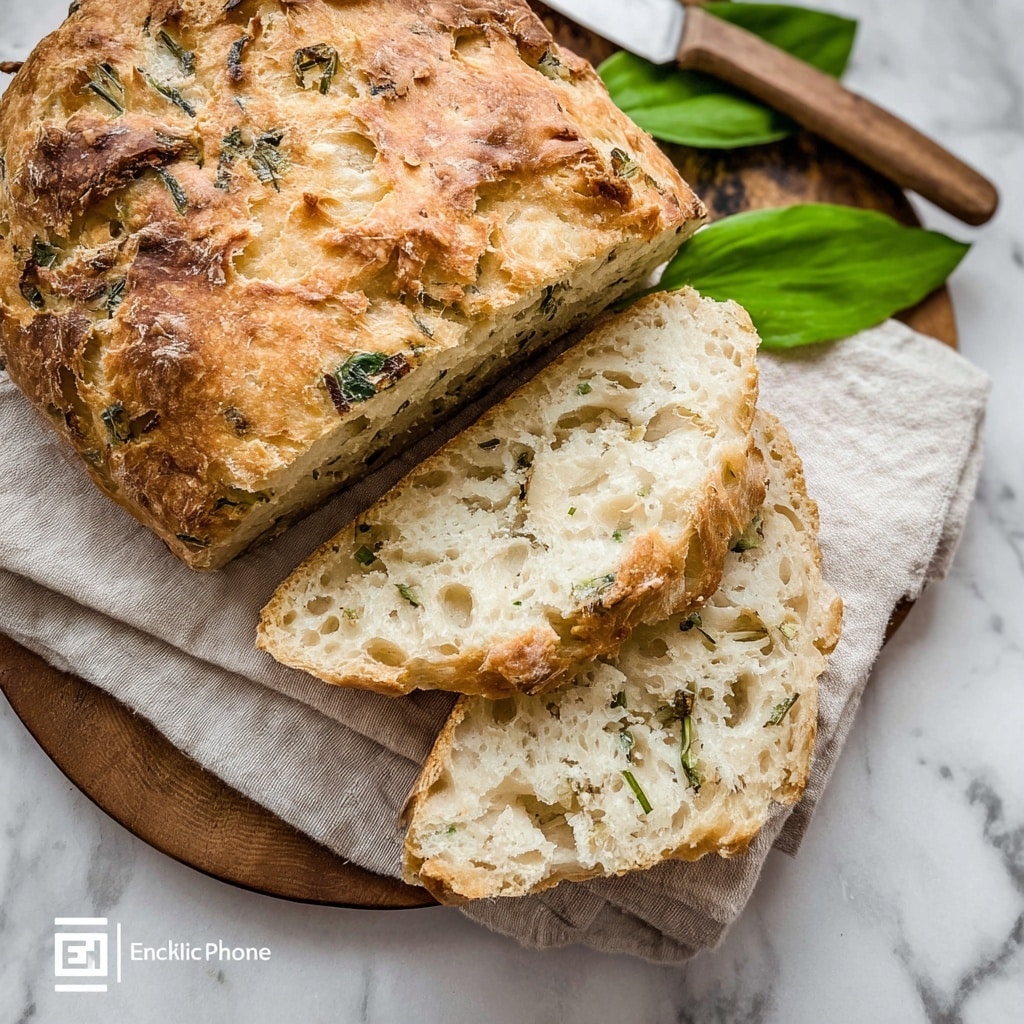
If you’ve ever dreamed of baking rustic, flavorful bread without the fuss of kneading by hand, the No Knead German Wild Garlic Bread Recipe is your golden ticket. This delightful bread is packed with the fresh, vibrant essence of wild garlic, perfectly balanced with hearty spelt and wheat flours. Whether you’re a seasoned home baker or a curious beginner, this recipe combines simplicity and authenticity, delivering a crusty, aromatic masterpiece that fills your kitchen with irresistible warmth and makes every bite a celebration of traditional German flavors.

Ingredients You’ll Need
The charm of the No Knead German Wild Garlic Bread Recipe lies in its straightforward yet thoughtful ingredients. Each one plays an essential role, from creating a tender crumb to infusing the bread with bright herbal notes and a satisfying crust.
- 375 g buttermilk (1 1/2 cups): Provides tangy moisture and tenderizes the crumb; a vegan alternative works too if preferred.
- 8 g fresh yeast for overnight fermentation OR 25 g for 1 hour leavening time: The magic behind the perfect rise and airy texture of the bread.
- 1.5 tsp sugar: Feeds the yeast and adds a subtle depth of flavor to the bread.
- 320 g spelt flour 630 (about 3 cups): Offers a nutty, wholesome character to the loaf with great structure.
- 230 g wheat flour 550 (about 2 cups): Helps create the perfect balance of elasticity and softness.
- 30 grams olive oil (2 tbsp): Adds richness and supports a tender crumb with a delicate fruity note.
- 2.5 tsp salt or wild garlic salt: Essential for boosting all flavors and enhancing the bread’s savory appeal.
- 20-25 wild garlic leaves (chopped finely): Brings that unmistakable fresh, garlicky punch to set this recipe apart from any other bread.
How to Make No Knead German Wild Garlic Bread Recipe
Step 1: Preparing the Yeast Mixture
Start by placing the room temperature buttermilk, fresh yeast, and sugar into a mixing bowl. Use a spoon or whisk to gently combine everything until the yeast dissolves fully. This little waiting game is what kickstarts the fermentation, resulting in wonderfully airy bread.
Step 2: Combining the Dough
Next, add your spelt flour, wheat flour, chopped wild garlic, olive oil, and salt to the yeast mixture. Knead everything together for approximately 4 minutes until the dough is smooth but still quite moist. Kneading is brief here because the long rise will do the heavy lifting for gluten development.
Step 3: Fermentation and Rising
Oil a large bowl and place your dough inside. Cover it loosely with plastic wrap or a clean cloth. Now, you can choose your rising method: either leave it at room temperature for 1 hour using 25 grams of yeast or refrigerate overnight for 12-14 hours with just 8 grams of yeast. The overnight method builds deep, rich flavor and a tender texture that’s worth the wait.
Step 4: Folding and Shaping
After the dough has risen, wet your hands and gently fold the dough over itself several times within the bowl. This technique strengthens the structure without the need for intense kneading. Then carefully transfer the dough into a proofing basket to shape it into a beautiful round loaf.
Step 5: Preparing Wild Garlic Leaves
Thoroughly wash the wild garlic leaves, then shake off the excess water and let them drain in a colander. This step ensures your leaves release their fresh aroma without adding unwanted moisture to the dough.
Step 6: Baking Your Bread
Preheat your oven to 240 degrees Celsius (430 Fahrenheit) and place a lidded pot inside to get piping hot. When your dough has had a moment to rest in the proofing basket, gently lift and transfer it directly into the scorching pot. Pop the lid on and place in the oven for 30-35 minutes, then remove the lid and bake an additional 10 minutes at 200 degrees Celsius (400 Fahrenheit) to develop that perfectly golden crust. Remember to keep an eye on the color so your bread bakes to perfection without getting too dark.
Step 7: Cooling and Enjoying
Carefully remove the pot from the oven and take off the lid. Let your beautiful loaf cool slightly before slicing, so the crumb sets just right. Then it’s time to savor the fresh, garlicky, crusty goodness you have baked yourself!
How to Serve No Knead German Wild Garlic Bread Recipe
Garnishes
The natural flavor of wild garlic shines in this bread, but adding a light brush of melted herb butter or a sprinkle of flaky sea salt on warm slices really elevates every bite. Fresh wild garlic leaves or a drizzle of good-quality olive oil also make wonderful garnishes to complement the bread’s robust character.
Side Dishes
This bread pairs beautifully with a variety of foods: creamy cheeses like Camembert or herby goat cheese, hearty soups such as potato-leek or tomato bisque, and even rustic German dishes like sauerkraut or smoked sausage. It’s versatile enough to steal the show as a centerpiece or simply accompany your favorite spread.
Creative Ways to Present
Try slicing the bread thickly and serving it as a base for open-faced sandwiches topped with fresh greens, radishes, and a smear of creme fraiche. Alternatively, toast slices lightly and use them to create a flavorful garlic bruschetta with tomatoes and basil. Presentation-wise, a rustic wooden board dotted with wild garlic flowers and leaves adds a charming, natural touch.
Make Ahead and Storage
Storing Leftovers
Leftover bread keeps best at room temperature in a paper bag or bread box, which allows it to breathe and keeps the crust crisp overnight. Avoid plastic as it traps moisture and softens the crust.
Freezing
If you want to enjoy your No Knead German Wild Garlic Bread Recipe later, freeze it whole or sliced in an airtight bag or container. Thaw at room temperature when ready to eat for the best texture and flavor.
Reheating
To revive day-old bread, sprinkle a bit of water on the crust and reheat it in a 180 degrees Celsius (350 Fahrenheit) oven for about 10 minutes. This restores the crispy crust and warms the soft crumb beautifully.
FAQs
Can I use dried yeast instead of fresh yeast for this recipe?
Yes, you can substitute dried yeast. For 8 grams of fresh yeast, use about 2.5 grams (1 teaspoon) of active dry yeast for overnight fermentation, and for 25 grams fresh yeast, use approximately 7 grams (2 teaspoons) for the faster rise.
What if I can’t find wild garlic leaves? Can I use regular garlic?
Wild garlic gives a milder, more herbaceous flavor than regular garlic. If wild garlic isn’t available, you can use young garlic greens or a small amount of finely minced garlic, but keep the quantity lighter to avoid overpowering the bread.
Why does the recipe call for both spelt and wheat flour?
The blend of spelt and wheat flour combines nutty, wholesome spelt with the elastic qualities of wheat, creating a bread that’s flavorful but still holds together beautifully with great texture.
How important is the lidded pot in baking this bread?
The lidded pot locks in steam during the first part of baking, which is crucial for developing the bread’s signature crusty yet tender exterior. If you don’t have one, a Dutch oven or any oven-safe pot with a tight-fitting lid will work perfectly.
Can this recipe be made vegan?
Absolutely! Simply swap the buttermilk for a plant-based buttermilk alternative like almond or soy milk mixed with a bit of lemon juice or vinegar to replicate the acidity.
Final Thoughts
There’s something truly magical about pulling a warm loaf of No Knead German Wild Garlic Bread Recipe fresh from the oven. It’s a recipe that combines ease and elegance in one fragrant package. I encourage you to give it a try—once you taste that tender crumb and fresh garlic aroma, you’ll understand why this bread becomes an instant favorite in any household. Happy baking!
Print
No Knead German Wild Garlic Bread Recipe
- Prep Time: 10 minutes
- Cook Time: 50 minutes
- Total Time: 1 hour 10 minutes (short fermentation) or 12-14 hours including overnight rise
- Yield: 12 servings
- Category: Bread
- Method: Baking
- Cuisine: German
- Diet: Vegetarian
Description
This No Knead German Wild Garlic Bread is a flavorful and rustic homemade loaf, made easy with minimal kneading and enriched with fresh wild garlic. The bread is prepared with a blend of spelt and wheat flours, and slow-fermented either overnight or in a shorter period using more yeast. Baked in a covered pot to create a perfect crust, this aromatic bread is perfect for springtime meals and pairs beautifully with a variety of dishes.
Ingredients
Wet Ingredients
- 375 g buttermilk (1 1/2 cups – or vegan alternative)
- 30 grams olive oil (2 tbsp)
- 8 g fresh yeast for overnight fermentation OR 25 g fresh yeast for 1 hour leavening time
- 1.5 tsp sugar
Dry Ingredients
- 320 g spelt flour 630 (about 3 cups)
- 230 g wheat flour 550 (about 2 cups)
- 2.5 tsp salt or wild garlic salt
Herbs
- 20–25 wild garlic leaves (chopped into small pieces)
Instructions
- Dissolve Yeast: Place room temperature buttermilk, fresh yeast, and sugar into a mixing bowl and stir to combine. Leave the mixture to rest so the yeast can dissolve and activate.
- Mix Dough: Add the spelt flour, wheat flour, salt (or wild garlic salt), chopped wild garlic leaves, and olive oil to the bowl. Knead the dough thoroughly for about 4 minutes until ingredients are well incorporated.
- First Rise: Transfer the dough into an oiled bowl and cover. Let it rise either for 1 hour with 25 g yeast or refrigerate overnight (12-14 hours) with 8 g yeast for slow fermentation.
- Shape and Fold: After rising, wet your hands and gently fold the dough over itself a few times within the bowl. Then place the dough into a proofing basket to shape it further.
- Prepare Wild Garlic: Wash the wild garlic leaves thoroughly, pat them dry or shake off excess water, and drain in a large colander to ensure they are dry before use.
- Preheat Oven and Pot: Place a heavy pot with lid into the oven and preheat to 240°C (430°F). Once hot, carefully remove the pot, transfer the dough directly from the proofing basket into the pot, cover it with the lid, and place it back in the oven.
- Bake Covered: Bake the bread with the lid on for 30-35 minutes at 240°C (430°F) to create steam and develop a crust.
- Bake Uncovered: Remove the lid and continue baking for another 10 minutes at 200°C (400°F) to brown and crisp the crust further. Keep an eye to prevent over-browning.
- Cool and Serve: Carefully remove the pot from the oven, take the bread out, let it cool slightly, and enjoy this aromatic wild garlic bread fresh.
Notes
- You can substitute buttermilk with a vegan alternative such as oat or almond milk mixed with lemon juice or vinegar.
- If opting for overnight fermentation, use less yeast (8 g) and refrigerate the dough to develop flavor.
- Wild garlic leaves should be fresh and well washed to avoid grit in the bread.
- Using a preheated pot mimics the effect of a steam oven, ensuring a crispy crust without professional equipment.
- Adjust baking times according to your oven’s behavior, especially if using fan/convection mode.