Description
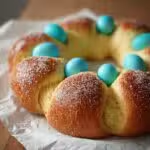
This Italian Easter Bread is a festive, sweet braided loaf traditionally adorned with pastel-dyed hard-boiled eggs. Soft, slightly sweet, and enriched with butter and eggs, this bread is perfect for celebrating Easter with its beautiful presentation and delightful flavors. The dough is braided and shaped into a circle, topped with colorful eggs, and baked to a golden finish, creating a centerpiece-worthy treat.
Ingredients
Dough Ingredients
- 4 cups all-purpose flour, plus extra for kneading
- 1/2 cup granulated sugar
- 1 packet (2 1/4 teaspoons) active dry yeast
- 1 teaspoon salt
- 1/2 cup milk, warmed to 110°F
- 1/2 cup water, warmed to 110°F
- 1/4 cup unsalted butter, softened
- 2 large eggs
- 1 teaspoon vanilla extract
- 1 teaspoon orange zest (optional, for flavor)
Topping and Decoration
- 4-6 hard-boiled eggs (dyed in pastel colors for Easter)
- 1/4 cup sugar (for sprinkling)
- 1 egg yolk (for egg wash)
Instructions
- Prepare the Dough: In a large bowl, combine the warm milk, warm water, and 1 tablespoon of sugar. Sprinkle the yeast over the mixture and let it sit for about 5-10 minutes until it becomes frothy, indicating the yeast is active.
- Mix the Ingredients: In a separate large bowl, whisk together the flour, remaining sugar, and salt. Add the yeast mixture, softened butter, eggs, vanilla extract, and optional orange zest. Mix everything until the dough begins to come together into a shaggy mass.
- Knead the Dough: Turn the dough onto a floured surface and knead for 5-8 minutes until it is smooth and elastic. If the dough is too sticky, sprinkle in a little more flour as needed. Place the dough in a greased bowl, cover with a clean towel, and let it rise in a warm place for 1 to 1.5 hours until doubled in size.
- Shape the Bread: Punch down the risen dough and divide it into three equal portions. Roll each portion into a long rope about 12-15 inches long. Braid the three ropes together and form the braid into a circular shape, pinching the ends together to seal.
- Add the Dyed Eggs: Gently press the hard-boiled, dyed eggs into the dough braid evenly. Arrange them symmetrically or in your preferred pattern, making sure they are securely nestled so they don’t fall out during baking.
- Let the Dough Rise Again: Cover the braided loaf with a clean towel and let it rise for another 30-45 minutes, or until it has puffed up noticeably.
- Prepare the Egg Wash: In a small bowl, whisk together the egg yolk with a tablespoon of water. Brush this mixture evenly over the entire loaf to help achieve a beautiful golden color while baking.
- Bake the Bread: Preheat your oven to 350°F (175°C). Place the bread on a parchment-lined baking sheet and bake for 25-30 minutes. The bread should be golden brown on top and sound hollow when tapped on the bottom, indicating it is fully baked.
- Cool and Serve: Remove the bread from the oven and let it cool completely on a wire rack. Once cooled, slice and serve. The dyed eggs can be eaten with the bread or kept as a decorative element for the Easter celebration.
Notes
- Ensure liquids are warmed to about 110°F to activate the yeast without killing it.
- Using orange zest adds a subtle citrus flavor that complements the sweetness of the bread but can be omitted if preferred.
- The dyed eggs can be stored separately if you want to keep them as decorations rather than eating them together with the bread.
- If the dough feels too sticky when kneading, add extra flour gradually—you want a soft but workable dough.
- Let the dough rise in a warm, draft-free environment for best results.
