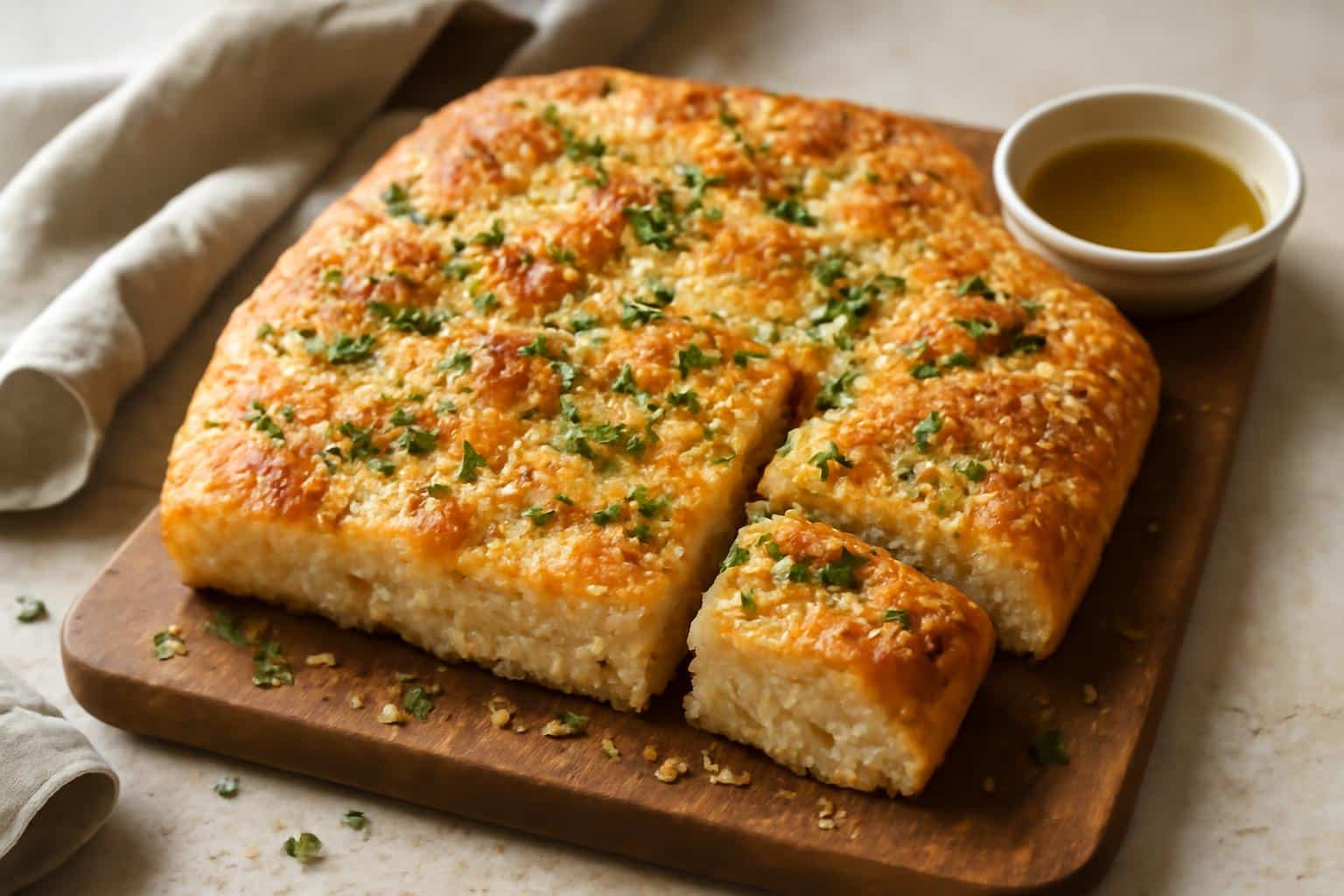
There’s something incredibly comforting about homemade bread, and when it’s garlic parmesan focaccia, the experience becomes unforgettable. This garlic parmesan focaccia recipe brings together a crisp golden crust with a soft, airy crumb infused with fragrant garlic and rich parmesan cheese. Baking it at home not only fills your kitchen with an irresistible aroma but also ensures you savor every bite fresh from the oven.

Whether you’re serving it as an appetizer, a snack to share, or alongside your favorite meal, this garlic parmesan focaccia is simple to make and impresses every time. You’ll love how easy it is to create bakery-quality bread right in your own kitchen.
Why You’ll Love This Recipe
- Easy to prepare with simple everyday ingredients
- Soft, fluffy interior with a crispy, golden crust
- Garlic and parmesan provide bold, savory flavor
- Perfect for dipping or pairing with soups and salads
- Great for entertaining or casual family meals
Ingredients
Gather these fresh ingredients to make the perfect garlic parmesan focaccia bread at home:
- 3 1/2 cups all-purpose flour
- 1 tablespoon sugar
- 2 teaspoons instant yeast
- 1 1/2 teaspoons salt
- 1 1/4 cups warm water (about 110°F)
- 1/4 cup extra virgin olive oil, plus more for drizzling
- 4 cloves garlic, finely minced
- 1/2 cup freshly grated parmesan cheese
- 1 tablespoon fresh rosemary, chopped (optional)
- Coarse sea salt for sprinkling
Recipe Details
- Prep Time: 20 minutes
- Cook Time: 25 minutes
- Total Time: 1 hour 45 minutes (includes rising time)
- Servings: 8 slices
- Calories: Approximately 220 per serving
How to Make Garlic Parmesan Focaccia Bread: The Best Homemade Recipe
- In a large bowl, combine the flour, sugar, instant yeast, and salt. Mix well.
- Add the warm water and 1/4 cup olive oil to the dry ingredients. Stir with a wooden spoon until a rough dough forms.
- Turn the dough onto a lightly floured surface and knead for about 8 minutes until smooth and elastic.
- Place the dough in a lightly oiled bowl, cover with a clean towel or plastic wrap, and let it rise in a warm place for 1 hour or until doubled in size.
- Preheat your oven to 425°F. Lightly oil a 9×13-inch baking pan.
- Transfer the risen dough to the pan and press it out evenly with your fingers, creating dimples all over the surface.
- Drizzle 2 tablespoons of olive oil evenly over the dough. Sprinkle the minced garlic, parmesan cheese, chopped rosemary (if using), and coarse sea salt evenly on top.
- Bake for 20-25 minutes until the focaccia is golden brown and crisp on the edges.
- Remove from the oven and allow to cool slightly before slicing and serving warm.
Tips for the Best Results
- Use instant yeast for quicker rising without the need to proof.
- If you prefer a softer crust, cover the focaccia with foil during the last 10 minutes of baking.
- Freshly grated parmesan melts better and offers a richer flavor than pre-grated cheese.
- Don’t skip the dimpling step—it helps trap the olive oil and toppings for maximum flavor.
- Let the dough rise in a draft-free, warm area for best fermentation results.
Storage and Reheating
Store leftover garlic parmesan focaccia bread in an airtight container at room temperature for up to 2 days or wrapped tightly in the fridge for up to 4 days. To maintain freshness, avoid leaving it exposed to air.
For longer storage, freeze the focaccia wrapped in foil and sealed in a freezer bag for up to 3 months. Reheat in a preheated 375°F oven for about 10 minutes to restore its crispness and warm the bread through.
Frequently Asked Questions
Can I use fresh yeast instead of instant yeast?
Yes, you can substitute fresh yeast, but you’ll need to proof it in warm water with a pinch of sugar first. Use about 2 1/4 teaspoons of fresh yeast to replace 2 teaspoons instant yeast.
What can I use if I don’t have parmesan cheese?
Pecorino Romano or Asiago cheeses are great substitutes as they offer a similar sharp, nutty flavor that complements focaccia well.
Is it okay to add herbs other than rosemary?
Absolutely! Thyme, oregano, or basil work wonderfully. Feel free to experiment with your favorite herbs to customize the flavor.
Can this recipe be made gluten-free?
While this recipe relies on all-purpose flour for structure, you can try a gluten-free flour blend designed for bread baking, but results may vary in texture and rise.