
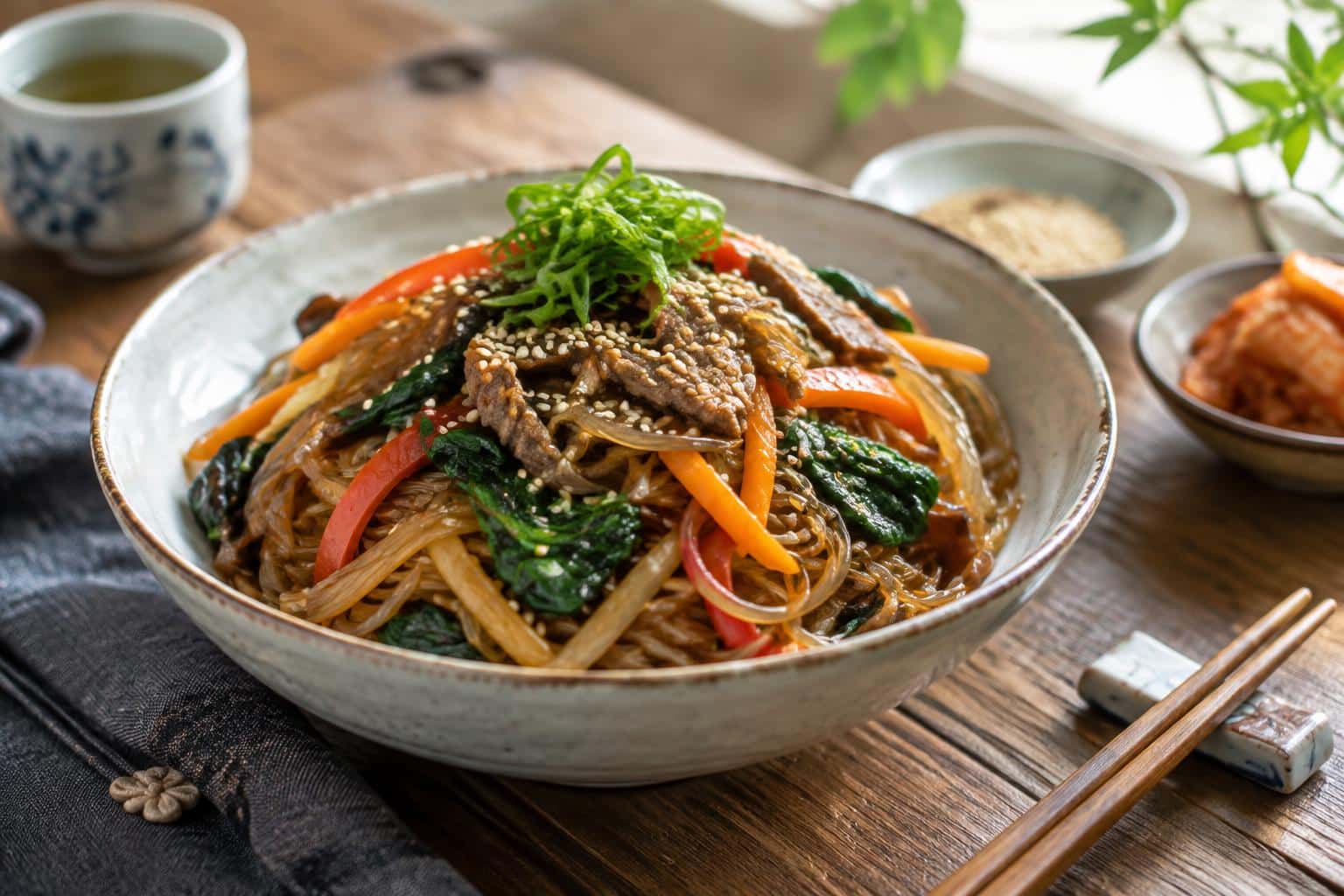
Japchae is a beloved Korean dish that’s both comforting and vibrant, featuring silky glass noodles mixed with a colorful array of vegetables and a savory-sweet sauce. When you make authentic Korean japchae noodles at home, you get a deliciously satisfying meal that’s perfect for any occasion, from weeknight dinners to special gatherings.

This recipe guides you through every step to create the perfect balance of flavors and textures in your japchae. Once you try it, you’ll see why this dish is a staple in Korean cuisine and a favorite internationally.
Why You’ll Love This Recipe
- Authentic flavor with a perfect balance of sweet and savory
- Uses simple, easy-to-find ingredients
- Quick and straightforward stovetop method under 40 minutes
- Customizable with your favorite vegetables and proteins
- Delicious served warm or at room temperature, ideal for leftovers
Ingredients
Gather these fresh and flavorful ingredients to make your authentic Korean japchae noodles. This recipe serves about 4 people.
- 8 ounces sweet potato glass noodles (dangmyeon)
- 2 tablespoons toasted sesame oil, divided
- 3 tablespoons soy sauce
- 2 tablespoons granulated sugar
- 3 cloves garlic, minced
- 1 medium carrot, julienned
- 1 small onion, thinly sliced
- 4 ounces baby spinach, roughly chopped
- 4 ounces shiitake mushrooms, stemmed and sliced
- 3 green onions, sliced into 2-inch pieces
- 2 large eggs
- 1/4 cup roasted sesame seeds
- 1 tablespoon vegetable oil
- Salt and black pepper, to taste
Recipe Details
- Prep Time: 15 minutes
- Cook Time: 20 minutes
- Total Time: 35 minutes
- Servings: 4
- Calories: Approximately 350 per serving
How to Make Authentic Korean Japchae Noodles Recipe
- Cook the glass noodles according to package instructions (usually boiling for 6–7 minutes), then drain and rinse under cold water. Toss with 1 tablespoon of toasted sesame oil to prevent sticking.
- In a small bowl, whisk together soy sauce, sugar, and minced garlic to make the sauce. Set aside.
- Heat vegetable oil in a large skillet or wok over medium-high heat. Add onions and carrots, stir-frying for about 3 minutes until slightly softened.
- Add sliced shiitake mushrooms and cook for another 3 minutes until tender. Toss in spinach and green onions, cooking just until spinach wilts, about 1 minute.
- Push vegetables to the side of the pan and scramble the eggs in the empty space until fully cooked. Break them into small pieces and mix with vegetables.
- Add the cooked noodles to the pan and pour the sauce over everything. Toss gently but thoroughly to coat noodles and vegetables evenly. Cook for 2–3 minutes until heated through and flavors meld.
- Season with salt and black pepper to taste, then drizzle remaining tablespoon of toasted sesame oil over the top. Give a final toss.
- Transfer japchae to a serving dish and sprinkle generously with roasted sesame seeds for garnish.
Tips for the Best Results
- Rinse noodles with cold water after cooking to stop the cooking process and achieve the signature chewy texture.
- Use sweet potato starch noodles (dangmyeon) for authentic taste and texture—don’t substitute with regular pasta.
- Prepare all your vegetables before cooking, as stir-frying happens quickly.
- Adjust sugar and soy sauce to your preferred balance of sweetness and saltiness.
- Try adding cooked beef, chicken, or tofu for extra protein and variety.
Storage and Reheating
Store leftover japchae noodles in an airtight container in the refrigerator for up to 3 days. When ready to eat, reheat gently in a skillet over medium heat with a splash of water or sesame oil to prevent sticking.
You can also freeze japchae by placing portions in freezer-safe containers for up to 1 month. Thaw overnight in the fridge before reheating on the stovetop for best texture.
Frequently Asked Questions
What noodles are best for japchae?
Sweet potato starch noodles, also known as dangmyeon, are the traditional choice. They have a chewy texture and absorb flavors well, making them ideal for authentic japchae.
Can I make japchae vegetarian?
Absolutely! Simply omit any meat and use vegetable broth or water if needed. The combination of mushrooms, spinach, and other vegetables still delivers rich flavor and satisfying texture.
Is japchae served hot or cold?
Japchae can be enjoyed warm, at room temperature, or even cold. It’s often served at Korean celebrations and tastes delicious in all these forms.
How do I prevent japchae noodles from sticking together?
After cooking, rinse the noodles under cold water and toss them with a bit of sesame oil. This keeps them separate and gives the noodles a glossy finish.