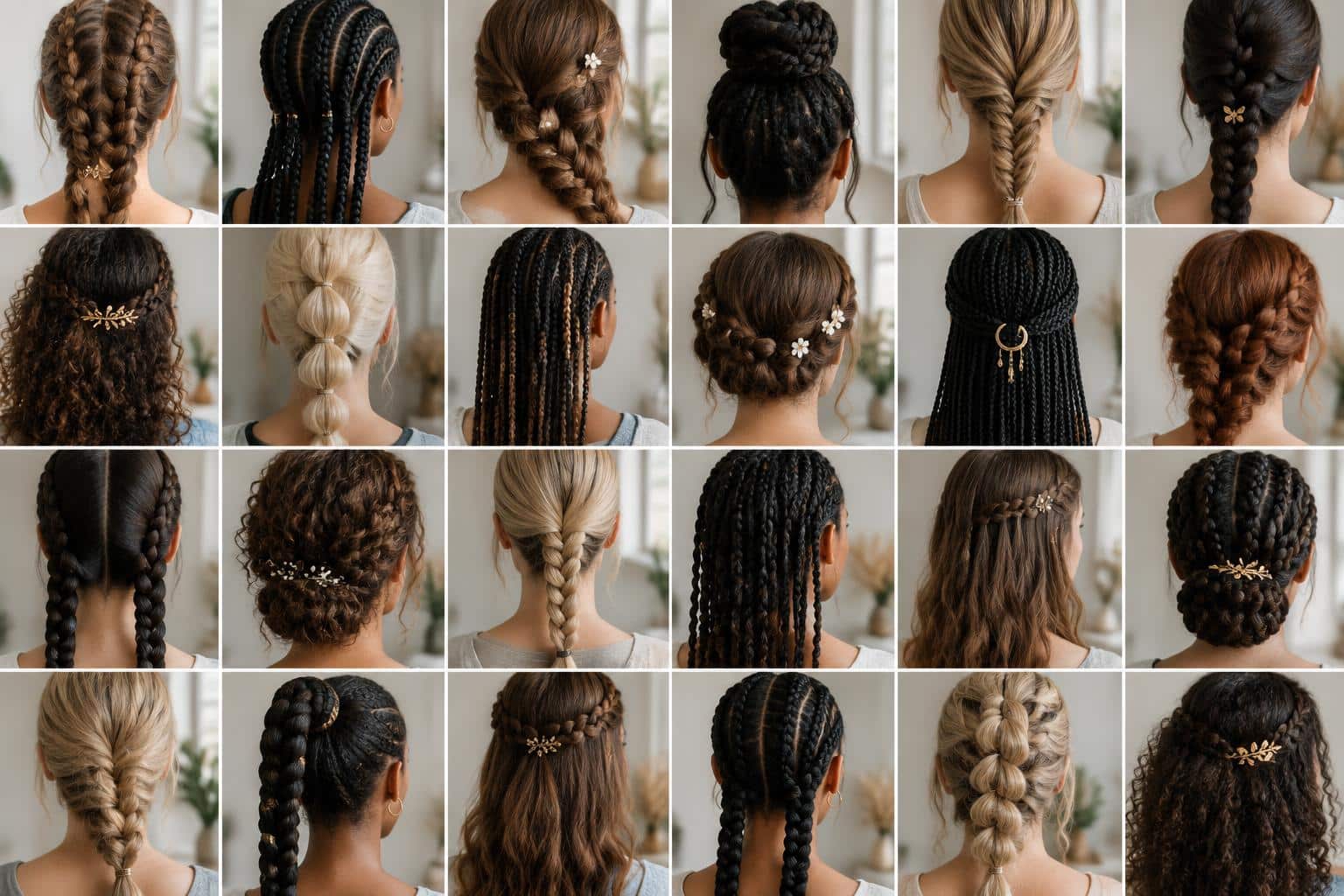
Getting started with braiding can feel intimidating, but you’re about to discover how to braid easily and confidently. Whether you want to add a bit of flair to your everyday look or master a new skill, these 24 easy braids for beginners have got you covered.

By learning how to braid step-by-step, you’ll unlock a world of creative hairstyles that are perfect for casual days, special occasions, or even breakfast prep time when you want to look effortlessly chic. Let’s dive in and braid your way to gorgeous hair!
Why You’ll Love This Recipe
- Simplifies complex braids into easy-to-follow steps for beginners.
- Offers a wide variety of 24 braid styles to suit every hair type and occasion.
- Enhances your hairstyling skills with practical, fun techniques.
- Requires no special tools beyond your hands and a few basic accessories.
- Perfect for adding daily flair without spending hours in front of the mirror.
Ingredients
Since braiding is a hands-on hairstyling technique, let’s talk about the essentials you’ll need to create these 24 easy braids for beginners:
- 1 detangling comb or brush
- 3-5 hair elastics (small and clear are best)
- 2-3 bobby pins for securing loose ends
- Optional: light styling gel or mousse for hold
- Optional: decorative hair accessories such as ribbons or beads
Recipe Details
- Prep Time: 10 minutes
- Cook Time: N/A (no-cook technique)
- Total Time: 10 minutes per braid
- Servings: 1 hairstyle
- Calories: 0 (hairstyle only!)
How to Make How To Braid For Beginners! 24 Easy Braids You Have To Try!
- Start by brushing or combing your hair thoroughly to remove any tangles; smooth hair is easier to braid and looks cleaner.
- Choose one of the 24 braid styles you want to try, such as the classic three-strand braid or a simple fishtail braid.
- Divide your hair into the number of strands required for your chosen braid (typically three for beginners).
- Cross the strands over one another in the pattern specific to the braid style, keeping tension even but not too tight to avoid discomfort.
- Continue braiding down the length of your hair until you reach the ends, then secure with a hair elastic.
- For a polished look, gently tug the braid to loosen it slightly and create volume.
- Use bobby pins to tuck in any flyaways or secure loose ends, and apply a light mist of hairspray or styling gel if desired.
- Experiment with adding accessories like ribbons or beads to personalize your braid.
- Repeat with different braid styles from the 24 easy braids list to practice and find your favorites.
Tips for the Best Results
- Start braiding with slightly damp hair or apply a bit of styling mousse for better grip.
- Practice regularly to build speed and confidence with each braid style.
- Use a mirror or enlist a friend for help when trying more complex braids for the first time.
- Keep your hands relaxed to avoid pulling your scalp too tight and causing discomfort.
- Protect your hair by gently undoing braids before bed and moisturizing strands to prevent breakage.
Storage and Reheating
While hairstyles can’t be stored in the fridge, you can maintain your braided look overnight by wrapping your hair in a silk scarf or using a satin pillowcase. This helps reduce friction and keeps braids neat for longer.
If your braid loosens or frizzes during the day, simply refresh it by gently tightening the strands and smoothing with a bit of styling gel or water spray.
Frequently Asked Questions
What is the easiest braid for beginners?
The classic three-strand braid is the easiest and best starting point for beginners. It uses simple overhand crossings and builds the foundation for more advanced styles.
Can I braid wet hair?
Braiding damp hair is often easier to manage because it reduces flyaways and helps the strands hold together better. Avoid braiding soaking wet hair to prevent scalp irritation and hair damage.
How long does it take to learn how to braid?
With practice, most beginners can master basic braids within a few days to a week. Consistent practice improves speed and neatness over time.
Are braids bad for hair?
Braids are generally safe when done gently and not too tight. Avoid excessive tension or leaving braids in for too long to prevent breakage or scalp discomfort.