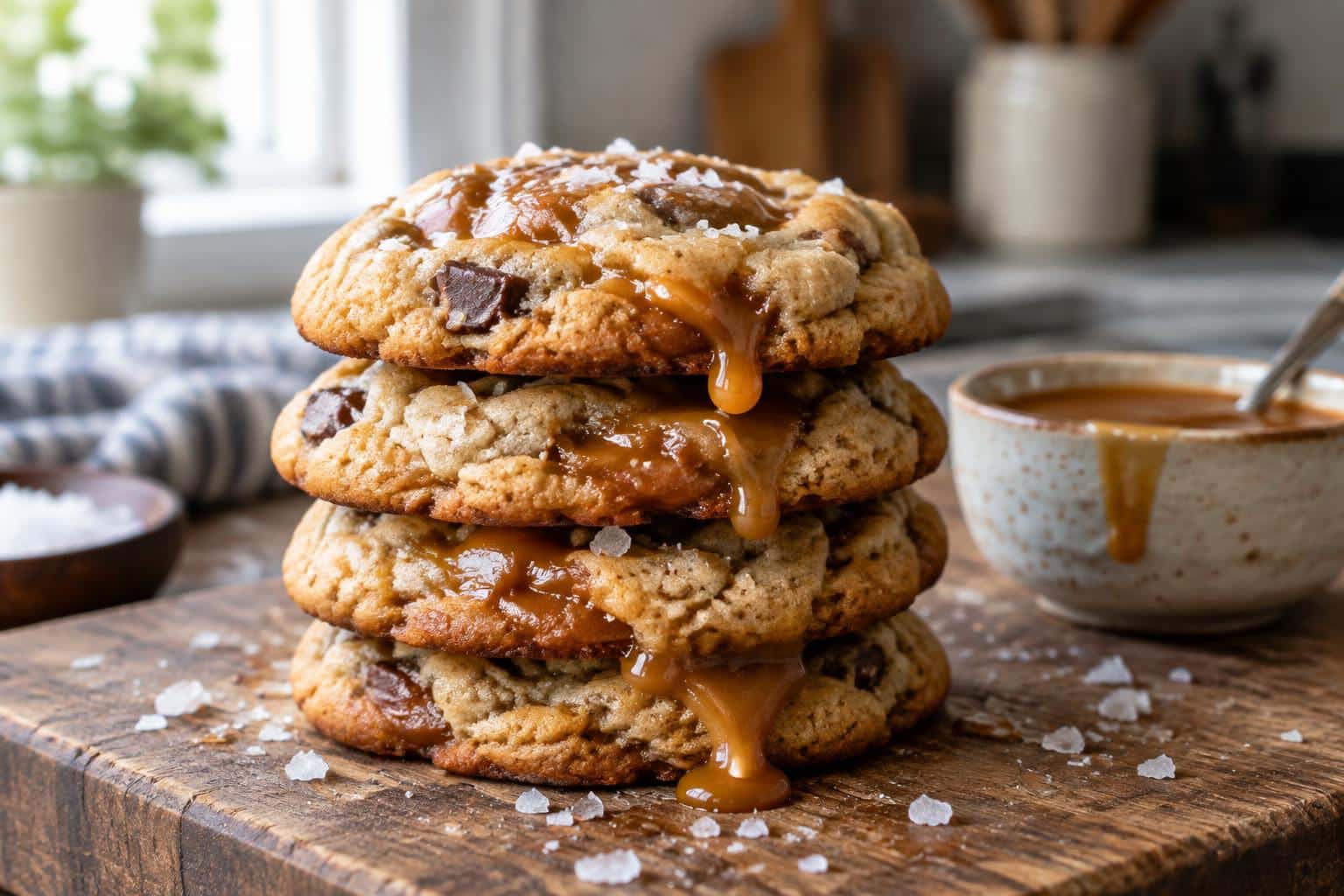
There’s something irresistible about the combination of sweet caramel and a sprinkle of sea salt, especially when baked into soft, chewy cookies. These sea salt caramel cookies offer just the right balance of gooey caramel pockets and a tender crumb that melts in your mouth. Whether you’re baking for a cozy night in or sharing with friends, this recipe is straightforward and rewarding.

You’ll find this sea salt caramel cookies recipe is both easy to follow and yields bakery-quality results. From mixing the dough to enjoying the fresh-out-of-the-oven aroma, it’s a delightful process that makes every bite worth it.
Why You’ll Love This Recipe
- Simple ingredients you likely already have at home.
- Chewy texture with soft caramel centers that don’t harden.
- Perfect balance of sweet and salty flavor.
- Quick to prepare and bake—ready in under 30 minutes.
- Great for gifting or satisfying your cookie cravings anytime.
Ingredients
Gather these ingredients to make about 18 delicious cookies.
- 2 1/4 cups all-purpose flour
- 1 teaspoon baking soda
- 1/2 teaspoon salt
- 3/4 cup unsalted butter, softened
- 3/4 cup packed light brown sugar
- 1/2 cup granulated sugar
- 1 large egg
- 2 teaspoons vanilla extract
- 1 cup caramel bits or chopped soft caramel candies
- Flaky sea salt for sprinkling on top
Recipe Details
- Prep Time: 10 minutes
- Cook Time: 12 minutes
- Total Time: 22 minutes
- Servings: 18 cookies
- Calories: Approximately 180 per cookie
How to Make Sea Salt Caramel Cookies | Chewy Easy Recipe
- Preheat your oven to 350°F (175°C) and line a baking sheet with parchment paper.
- In a medium bowl, whisk together the all-purpose flour, baking soda, and salt until well combined.
- In a large bowl, beat the softened butter, brown sugar, and granulated sugar until creamy and smooth, about 2-3 minutes.
- Add the egg and vanilla extract to the butter mixture and beat until fully incorporated.
- Gradually mix the dry ingredients into the wet ingredients until just combined; avoid overmixing.
- Fold in the caramel bits evenly throughout the dough without melting them.
- Using a cookie scoop or tablespoon, drop rounded balls of dough onto the prepared baking sheet, spacing them about 2 inches apart.
- Bake for 10-12 minutes, until the edges are lightly golden but the centers still look soft and slightly underbaked.
- Immediately after removing from the oven, sprinkle each cookie with a pinch of flaky sea salt, then allow to cool on the baking sheet for 5 minutes before transferring to a wire rack to cool completely.
Tips for the Best Results
- Use softened butter—not melted or cold—to achieve a creamy dough texture.
- Don’t overbake; underbaking slightly keeps the cookies chewy and the caramel gooey.
- Fold the caramel bits gently to avoid breaking them up too much and causing caramel to melt too early.
- Sprinkle flaky sea salt right after baking for maximum flavor contrast.
- Store leftovers in an airtight container at room temperature to maintain softness.
Storage and Reheating
Store your sea salt caramel cookies in an airtight container at room temperature for up to 4 days. If you want them to last longer, place them in a freezer-safe bag and freeze for up to 3 months.
To reheat, simply warm the cookies in a microwave for 10-15 seconds or in a preheated oven at 300°F for 5 minutes to refresh that chewy texture and melty caramel goo.
Frequently Asked Questions
Can I use regular caramel candies instead of caramel bits?
Yes, you can chop soft caramel candies into small pieces and fold them into the dough. Just be careful not to overmix, as too much stirring can cause the caramel to melt prematurely.
What type of sea salt works best for these cookies?
Flaky sea salt like Maldon or fleur de sel is ideal because it adds a delicate crunch and bright bursts of salty flavor without overpowering the sweetness.
How do I keep my cookies chewy?
Watch your baking time closely and remove the cookies when the edges just start to brown but the centers remain soft. Using brown sugar also helps retain moisture for chewiness.
Can I substitute butter with margarine or oil?
Butter is recommended for the best flavor and texture. Margarine or oil may affect the chewiness and flavor, so if substituted, results may vary.