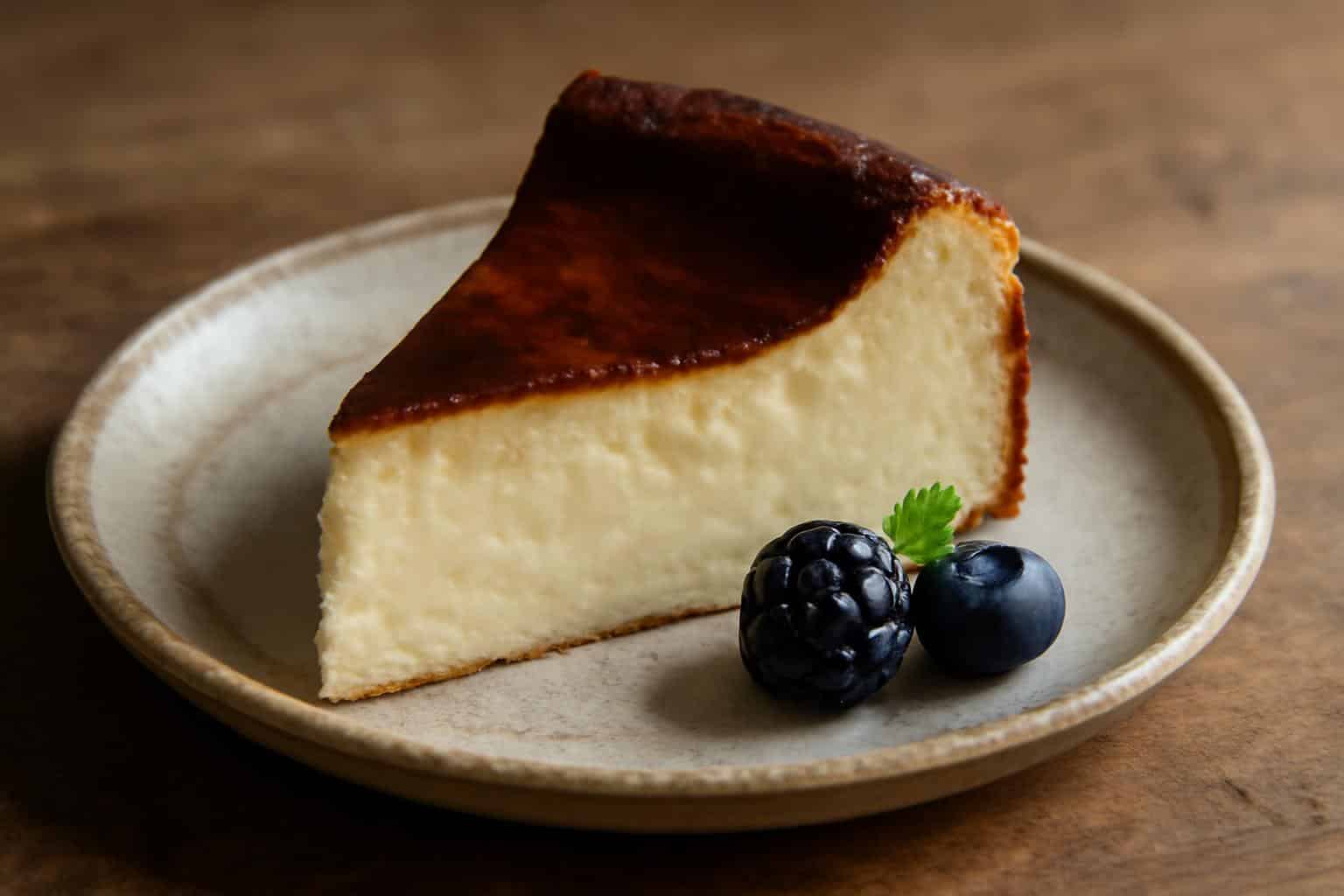
If you’ve been craving a rich, creamy dessert with a unique burnt top, the San Sebastian cheesecake is a must-try. This recipe brings you the perfect balance of a velvety interior and a caramelized crust that every cheesecake lover adores. You’ll soon see why this Basque dessert has taken the world by storm.

Making the san sebastian cheesecake at home is easier than you might expect, and the results are sure to impress your friends and family. Whether you’re new to cheesecakes or an experienced baker, this recipe will guide you step-by-step to create a dessert that’s both rustic and elegant.
Why You’ll Love This Recipe
- Delivers the iconic burnt, caramelized top for authentic flavor.
- Ultra creamy and smooth texture that’s irresistibly rich.
- Simple ingredients you likely have on hand.
- Minimal preparation with no crust needed.
- Versatile dessert perfect for casual or special occasions.
Ingredients
Gather these ingredients to make your own San Sebastian cheesecake from scratch. The simplicity of this list is part of what makes the final dessert so special.
- 4 cups cream cheese, softened
- 1 1/4 cups granulated sugar
- 4 large eggs, at room temperature
- 2 cups heavy cream
- 1/4 cup all-purpose flour
- 1 tsp vanilla extract
- 1/4 tsp salt
Recipe Details
- Prep Time: 15 minutes
- Cook Time: 50 minutes
- Total Time: 1 hour 5 minutes
- Servings: 8
- Calories: Approximately 460 per serving
How to Make san sebastian recepie
- Preheat your oven to 400°F and line a 9-inch springform pan with parchment paper, leaving an overhang to help remove the cheesecake easily.
- In a large bowl, beat the softened cream cheese and sugar together until smooth and creamy, about 3 minutes on medium speed.
- Add the eggs one at a time, mixing well after each addition for a smooth batter, then pour in the heavy cream and vanilla extract; beat until fully combined.
- Sift the flour and salt over the mixture and gently fold it in with a spatula until no lumps remain.
- Pour the batter into the prepared pan and place it on the middle rack of the oven. Bake for 45-50 minutes until the top is deep golden brown and slightly cracked, yet the center still jiggles gently.
- Turn off the oven and leave the cheesecake inside with the door slightly open for 30 minutes to cool gradually.
- Remove from oven and cool to room temperature, then refrigerate for at least 4 hours or overnight for best texture.
- Run a knife around the edges before removing the parchment paper and springform ring. Slice and serve chilled or at room temperature.
Tips for the Best Results
- Use full-fat cream cheese and heavy cream for a rich, creamy texture.
- Make sure your eggs are at room temperature to prevent lumps.
- Line your pan well with parchment paper to avoid sticking and achieve the rustic edges.
- Avoid overbaking; the center should remain slightly jiggly to ensure creaminess.
- Let the cheesecake rest in the fridge overnight to develop full flavor and texture.
Storage and Reheating
Store your San Sebastian cheesecake in an airtight container in the refrigerator for up to 4 days. The flavor and texture improve after resting overnight.
If you want to enjoy it slightly warmed, remove slices from the fridge and let them sit at room temperature for about 20 minutes before serving. Avoid microwaving to maintain the creamy texture.
Frequently Asked Questions
What makes San Sebastian cheesecake different from traditional cheesecake?
San Sebastian cheesecake is known for its burnt, deeply caramelized top and creamy, custard-like interior. Unlike traditional cheesecakes that often have a crust, this dessert has no crust and relies on its unique baking method to develop flavor and texture.
Can I use a different pan size for this recipe?
A 9-inch springform pan is ideal for the right thickness and baking time. You can use an 8-inch pan but may need to increase baking time slightly; a larger pan will yield a thinner cheesecake that may bake faster.
Why does the cheesecake have cracks on top?
Cracks are natural and part of the rustic charm of San Sebastian cheesecake. They happen due to the high baking temperature and the creamy batter. The cracks do not affect the taste or texture.
Is it necessary to use a springform pan?
While a springform pan makes it easier to remove the cheesecake, you can use a regular cake pan lined with parchment. Just be sure to leave enough overhang to lift the cheesecake out gently.