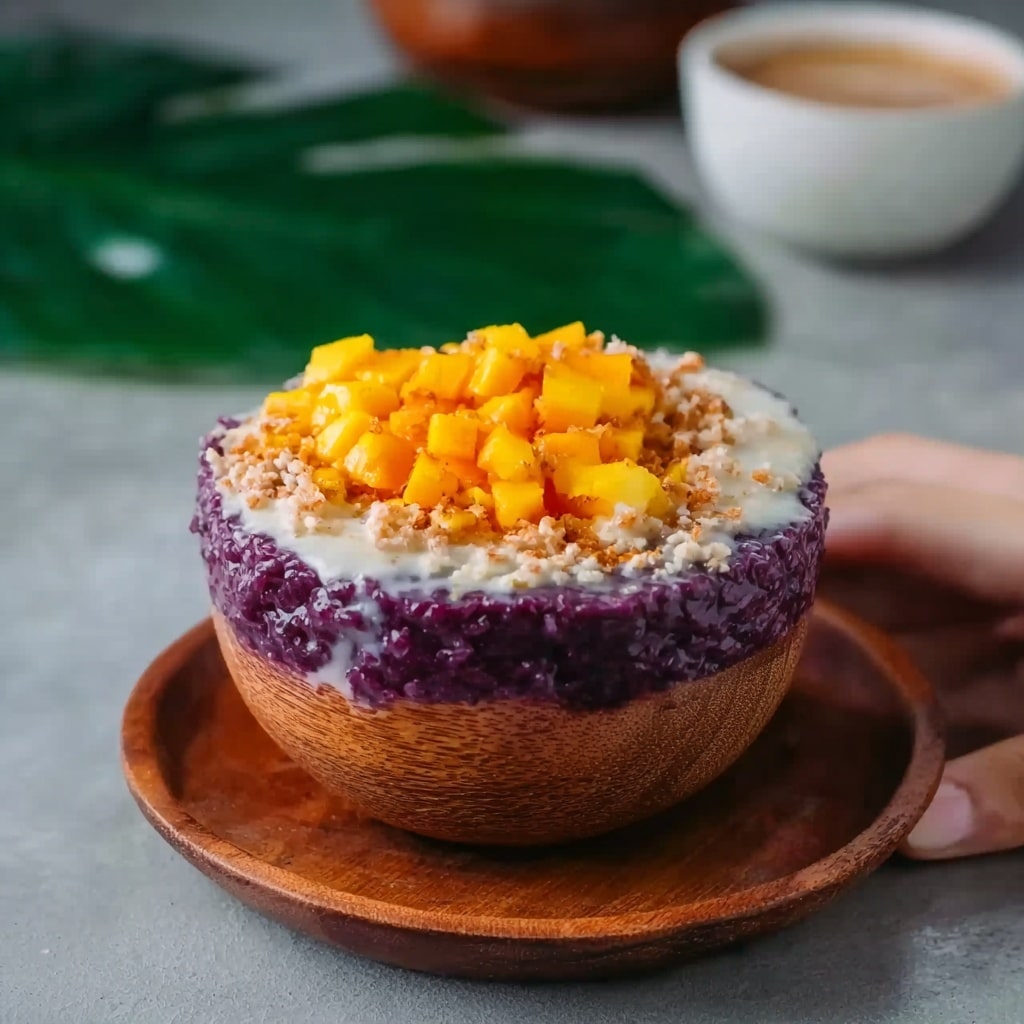
If you have a soft spot for bright, tropical flavors that come together in a comforting, creamy dessert, then you are going to absolutely adore this Thai Mango Sticky Rice Recipe. It’s a beloved treat from Thailand that combines luscious ripe mangoes with perfectly sticky, fragrant rice soaked in rich coconut milk. The balance of sweet, creamy, and slightly salty notes creates a dessert that feels both indulgent and refreshing at the same time. Whether it’s a special occasion or just a craving for something delightful, this recipe promises genuine happiness in every bite.

Ingredients You’ll Need
Gathering the right ingredients is the first step in making a successful Thai Mango Sticky Rice Recipe, and luckily, it’s all about simple, fresh components that come together to create layers of flavor and texture. Each element plays a crucial role, from the creamy coconut milk to the juicy mangoes that bring an irresistibly bright contrast.
- Glutinous rice: This sticky rice is what gives the dish its unique chewy texture; soaking it overnight is key for the perfect consistency.
- Full-fat coconut milk: Provides the rich, creamy base that infuses the rice with its signature flavor.
- Granulated sugar: Sweetens the coconut milk sauce just right, balancing the natural tartness of the mango.
- Salt: A pinch enhances the flavors and brings harmony between sweet and savory.
- Ripe mangoes: Make sure they are fully ripe for the best sweetness and juiciness; they add fresh, fruity brightness to the dish.
- Toasted sesame seeds or mung beans: Optional garnishes that add a delightful crunch and nutty aroma.
How to Make Thai Mango Sticky Rice Recipe
Step 1: Prepare and Steam the Sticky Rice
Start by rinsing your soaked glutinous rice under cold water until it runs clear; this removes excess starch and prevents clumping. Drain well before steaming. Line your steamer with cheesecloth or a clean kitchen towel to keep the grains from falling through. Steam the rice for about 30 minutes until it becomes beautifully sticky and translucent — this is the texture that makes this dessert truly special.
Step 2: Make the Coconut Sauce
While the rice is steaming, gently heat the coconut milk in a saucepan over low heat. Whisk in sugar and salt until everything dissolves into a smooth, fragrant sauce. This warm coconut milk will later soak into the rice, giving it that creamy, melt-in-your-mouth quality.
Step 3: Combine Rice and Coconut Sauce
Once the rice is steamed, transfer it to a mixing bowl and pour half of your warm coconut sauce over it. Gently fold to combine and let the rice sit for 15 minutes, allowing all the flavors to meld while the rice absorbs the creaminess.
Step 4: Prepare Mangoes and Final Assembly
Peel and slice your ripe mangoes into thin, elegant wedges. To serve, shape the sticky rice onto plates or bowls, arrange the mango slices on top, and drizzle with the remaining coconut sauce. Finish with a sprinkle of toasted sesame seeds or mung beans if you like a bit of crunch.
How to Serve Thai Mango Sticky Rice Recipe
Garnishes
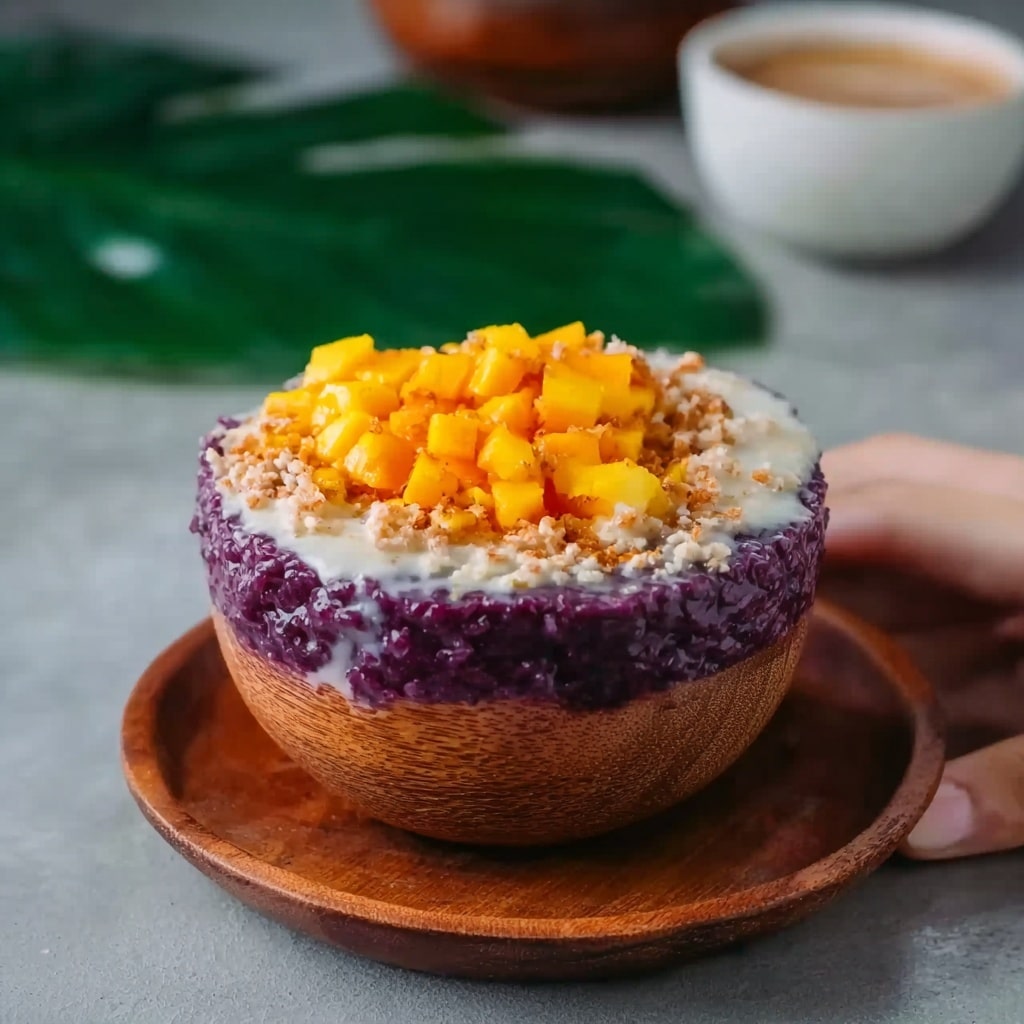
While optional, garnishing with toasted sesame seeds or crunchy mung beans elevates the taste and texture. These little additions provide a nutty crunch that contrasts wonderfully with the creamy, soft rice and juicy mango.
Side Dishes
This dessert stands beautifully on its own but pairs wonderfully with light Thai teas or fresh fruit platters. Since it is rich and sweet, serve alongside refreshing sips like jasmine iced tea or lemongrass-infused water to cleanse the palate between bites.
Creative Ways to Present
Make your Thai Mango Sticky Rice Recipe feel extra special by molding the sticky rice into fun shapes using small bowls or molds. You can also serve it in individual coconut shells or pretty glass jars, layering mango slices and sticky rice for a visually stunning presentation that’s sure to wow your guests.
Make Ahead and Storage
Storing Leftovers
If you find yourself with leftovers, store the sticky rice and mango separately in airtight containers in the refrigerator. The rice will keep best when wrapped well to retain moisture, but the mango is best fresh, as it can lose its texture and flavor over time.
Freezing
Freezing is not ideal for this dish since the texture of the sticky rice and fresh mangoes changes noticeably after thawing. For best results, enjoy the Thai Mango Sticky Rice Recipe fresh or chilled, rather than frozen.
Reheating
To reheat sticky rice, gently steam it again or warm it in a microwave with a damp paper towel to restore moisture without drying it out. Avoid reheating the mango slices; add those fresh when serving for the best flavor and texture.
FAQs
Can I use regular rice for Thai Mango Sticky Rice Recipe?
Regular rice won’t give you the chewy, sticky texture that glutinous rice provides. For an authentic experience, glutinous rice is essential as it’s specially grown to become sticky when cooked.
How ripe should the mangoes be?
Choose mangoes that are fully ripe but firm enough to slice easily. They should be sweet and fragrant, with vibrant yellow-orange flesh. Overripe mangoes may be too soft and mushy, which changes the texture balance.
Can I make this recipe vegan or dairy-free?
This recipe is naturally vegan and dairy-free since it uses coconut milk instead of dairy. Just ensure your sugar is vegan, as some sugars are processed with bone char.
Why do I need to soak the rice overnight?
Soaking the glutinous rice overnight softens it and reduces cooking time, resulting in stickier, more tender rice. It’s a simple step that makes a big difference in texture.
Can I prepare Thai Mango Sticky Rice Recipe ahead of time for a party?
You can prepare the rice and coconut sauce ahead, but assemble just before serving. Keep mangoes fresh and add garnishes last minute for the best flavor and appearance.
Final Thoughts
If you want a dessert that’s tropical, comforting, and simply bursting with flavor, this Thai Mango Sticky Rice Recipe should be at the top of your list. It’s surprisingly easy to make, uses straightforward ingredients, and delivers incredible results that feel like a special treat every time. Trust me, once you try it, you’ll be dreaming about the creamy, sweet, mango-filled goodness long after the last bite.
Print
Thai Mango Sticky Rice Recipe
- Prep Time: 10 minutes (plus overnight soaking)
- Cook Time: 30 minutes
- Total Time: 40 minutes (excluding soaking)
- Yield: 4 servings
- Category: Dessert
- Method: Steaming
- Cuisine: Thai
- Diet: Gluten Free
Description
This Thai Mango Sticky Rice recipe offers a deliciously sweet and creamy dessert combining sticky glutinous rice infused with rich coconut milk and perfectly ripe mango slices. A traditional Thai favorite, it’s easy to prepare and ideal for a tropical treat or sweet ending to any meal.
Ingredients
Rice
- 1 cup glutinous rice (soaked overnight)
Coconut Sauce
- 1 cup full-fat coconut milk
- ½ cup granulated sugar
- ¼ teaspoon salt
Fruit and Garnish
- 2 ripe mangoes (peeled and sliced)
- Toasted sesame seeds or mung beans (optional, for garnish)
Instructions
- Rinse the rice: Rinse the soaked glutinous rice under cold running water until the water runs clear to remove excess starch.
- Steam the rice: Drain the rice and place it in a lined steamer. Steam for about 30 minutes until the rice becomes sticky and translucent.
- Prepare coconut sauce: In a saucepan over low heat, whisk together coconut milk, granulated sugar, and salt until the sugar dissolves completely, then remove from heat.
- Mix rice with coconut sauce: Combine the steamed rice with half of the warm coconut sauce. Gently mix to coat the rice evenly and let it sit for 15 minutes to absorb the flavors.
- Slice mangoes: Peel and slice the ripe mangoes into thin wedges for serving.
- Assemble and serve: Mold the sticky rice onto serving plates, arrange mango slices on top or alongside, drizzle with the remaining coconut sauce, and sprinkle with toasted sesame seeds or mung beans if desired.
Notes
- Soaking the rice overnight is crucial to achieving the perfect sticky texture.
- Use ripe, sweet mangoes for the best flavor contrast.
- Optional garnishes like toasted sesame seeds or mung beans add a pleasant crunch and visual appeal.
- If you don’t have a steamer, use a fine mesh sieve or colander over boiling water to steam the rice.
- Adjust sweetness by adding more or less sugar according to taste.