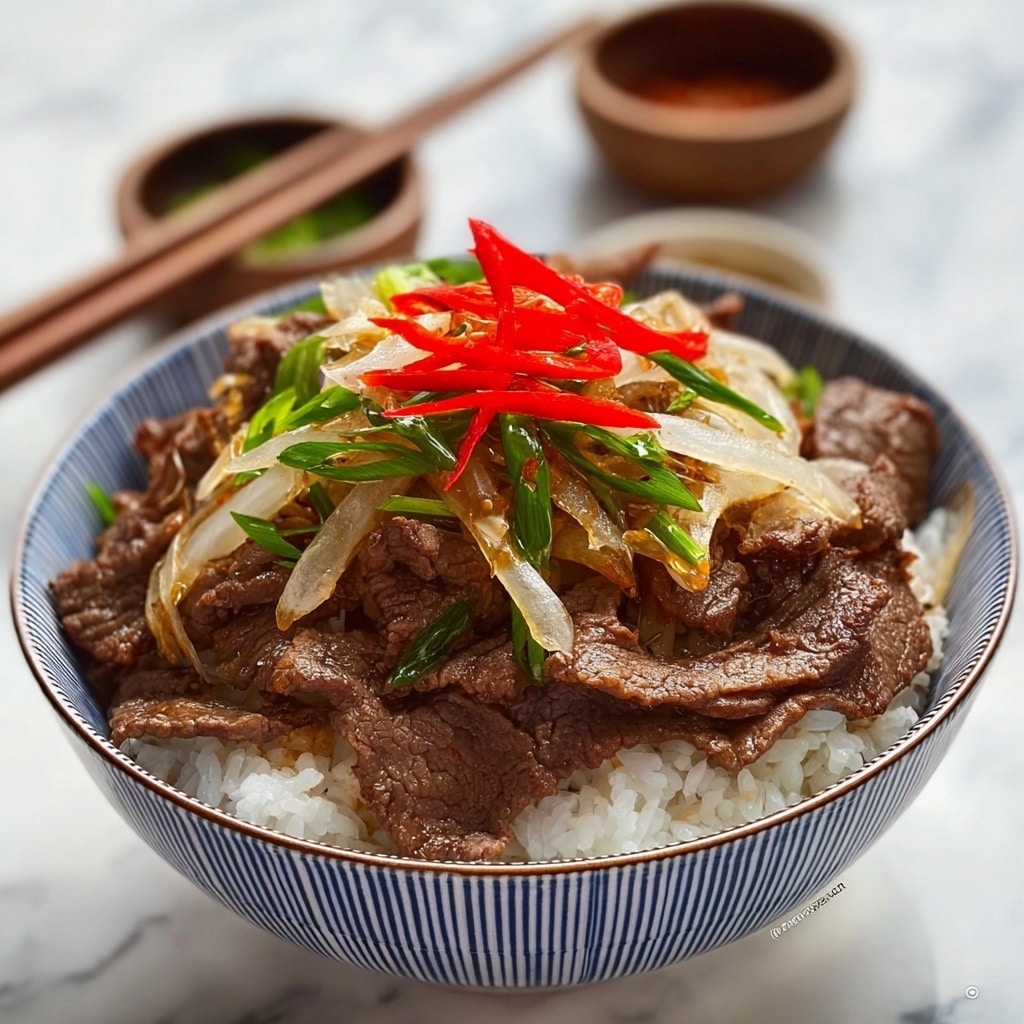
If you love comforting, flavorful dishes that come together quickly, you’ll adore this Gyudon (Japanese Beef Rice Bowl) Recipe. This classic Japanese meal features tender slices of beef simmered with sweet and savory seasonings atop fluffy Japanese short-grain rice. The harmony of dashi broth, mirin, soy sauce, and sugar creates a mouthwatering umami-rich sauce that perfectly coats each bite. Whether you’re looking for a speedy dinner or a satisfying lunch, this Gyudon is a delicious but simple way to enjoy authentic Japanese flavors right at home.

Ingredients You’ll Need
The beauty of the Gyudon (Japanese Beef Rice Bowl) Recipe lies in its straightforward ingredients, each bringing an essential note to the overall flavor profile. These simple staples make the dish approachable while delivering that signature balance of savory, sweet, and slightly tangy tastes.
- Onion (½, thinly sliced): Adds gentle sweetness and a tender texture to complement the beef.
- Green onion/scallion (1, diagonally sliced): Brings a fresh, mild sharpness and vibrant green color to finish.
- Thinly sliced beef (½ lb, ribeye preferred): The star of the dish, tender and quick to cook, soaking up the flavorful sauce.
- Dashi (½ cup): The umami-rich base, traditionally Japanese soup stock that elevates the entire dish.
- Sake (2 Tbsp): Adds depth and a subtle sweetness; can be substituted if needed.
- Mirin (2 Tbsp): A sweet rice wine that balances saltiness with a touch of caramel.
- Soy sauce (3 Tbsp): Key for salty, savory notes and dark color.
- Sugar (1 Tbsp): Enhances sweetness and helps harmonize flavors.
- Cooked Japanese short-grain rice (2 servings): The essential fluffy base to soak up every bit of sauce.
- Pickled red ginger (for garnish): Adds a striking color contrast and a refreshing tanginess.
How to Make Gyudon (Japanese Beef Rice Bowl) Recipe
Step 1: Prepare Your Ingredients
Start by thinly slicing half an onion and diagonally slicing the green onion for that burst of freshness at the end. Slightly freeze the beef—it firms up just enough for easier slicing—and then cut it into roughly 3-inch wide pieces, perfect for quick cooking and good mouthfeel.
Step 2: Create the Sauce Base
In a large frying pan, off the heat, mix together ½ cup dashi, 2 tablespoons sake, 2 tablespoons mirin, 3 tablespoons soy sauce, and 1 tablespoon sugar. Stir until the sugar completely dissolves, creating a luxurious combination that will infuse the beef with umami and a slight sweetness.
Step 3: Build the Layers with Vegetables and Beef
Spread the thinly sliced onions evenly in the pan with the sauce—this separation helps the onions become tender without clumping. Layer the beef slices on top, making sure they don’t overlap too much. This way, each piece cooks evenly and absorbs the flavor without steaming.
Step 4: Simmer to Perfection
Cover the pan and place it over medium heat. Once the mixture starts simmering, turn the heat down to low and let it cook gently for 3–4 minutes. This slow simmer lets the flavors marry beautifully as the beef tenderizes. Don’t forget to skim any foam or excess fat with a fine-mesh skimmer to keep the sauce clear and clean-tasting.
Step 5: Add Green Onions and Finish Cooking
Sprinkle the diagonally sliced green onions on top, cover again and cook for another minute. If you want to elevate this dish to another level, add beaten eggs here for a luscious, creamy finish. The gentle heat will just set the eggs—imagine spoony bites with silken texture.
Step 6: Assembly and Serving
Plate up two generous servings of warm Japanese short-grain rice in donburi bowls. Drizzle some of the beautifully fragrant sauce over the rice for that extra flavor burst. Then ladle the savory beef and onions on top. Finally, adorn each bowl with pickled red ginger for a pop of color and zing that cuts through the richness.
How to Serve Gyudon (Japanese Beef Rice Bowl) Recipe

Garnishes
A traditional garnish like pickled red ginger is not just decorative—it adds an invigorating sharpness that refreshes the palate. You can also add a sprinkle of shichimi togarashi, a Japanese seven-spice blend, for a gentle kick if you like some heat.
Side Dishes
Though Gyudon is filling on its own, pairing it with light sides can round out the meal beautifully. Consider simple miso soup for warmth, steamed vegetables for crunch and nutrients, or a crisp cucumber salad to cleanse the palate.
Creative Ways to Present
If you’re feeling playful, serve Gyudon over cauliflower rice for a low-carb twist or in a reusable bento box for lunch on-the-go. Adding a soft poached egg or topping with nori strips can also turn this humble dish into a stunning presentation.
Make Ahead and Storage
Storing Leftovers
After enjoying your Gyudon (Japanese Beef Rice Bowl) Recipe, any leftovers can be placed in an airtight container and refrigerated for 2 to 3 days. This approach keeps the beef tender and the flavors intact for a quick reheat later.
Freezing
Gyudon freezes well if you want to prepare in advance. Just cool the dish completely, transfer to a freezer-safe container, and freeze for up to 3 to 4 weeks. When ready to eat, thaw overnight in the fridge before reheating to preserve the best texture.
Reheating
To reheat, warm the Gyudon gently in a skillet over low heat or microwave until heated through, stirring occasionally to prevent drying. Adding a touch of water or dashi while reheating can help revive the luscious sauce consistency.
FAQs
Can I use other cuts of beef for the Gyudon recipe?
Absolutely! While ribeye or similar tender cuts are ideal for quick cooking, you can also use sirloin or flank steak. Just slice thinly and keep an eye on cooking time to avoid toughness.
Is it necessary to use dashi in this recipe?
Dashi is traditional and provides authentic umami depth, but if unavailable, you can use a good quality beef or vegetable broth. The flavor won’t be as distinctly Japanese, but will still be delicious.
Can I make a vegetarian or vegan version of Gyudon?
Yes! Substitute the beef with mushrooms such as shiitake or king oyster, and use vegan dashi or kombu broth. Adjust soy sauce and mirin to taste for a balanced vegetarian umami experience.
How spicy is Gyudon?
Gyudon is generally mild and sweet, with no inherent spiciness. However, you can always enhance with chili flakes or togarashi for heat according to your preference.
What is the best type of rice to use?
Japanese short-grain rice is best because it’s sticky and slightly sweet, which helps it hold together and soak up the delicious sauce perfectly. Avoid long-grain types as they won’t cling as well to the toppings.
Final Thoughts
This Gyudon (Japanese Beef Rice Bowl) Recipe is one of those simple dishes that never fails to impress, whether you’re craving something quick or a meal bursting with rich, comforting flavors. Once you’ve made it a time or two, it will likely become a go-to favorite in your cooking repertoire. Give it a try—you’ll love how effortlessly this bowl of deliciousness comes together and warms you from the inside out.
Print
Gyudon (Japanese Beef Rice Bowl) Recipe
- Prep Time: 10 minutes
- Cook Time: 10 minutes
- Total Time: 20 minutes
- Yield: 2 servings
- Category: Main Dish
- Method: Stovetop
- Cuisine: Japanese
Description
Gyudon, a classic Japanese beef rice bowl, features thinly sliced ribeye simmered with onions in a savory-sweet dashi-based sauce, served over fluffy Japanese short-grain rice and garnished with pickled red ginger. This quick 20-minute recipe captures the comforting flavors of Japan’s popular fast-food staple.
Ingredients
Beef and Vegetables
- ½ onion (4 oz, 113 g), thinly sliced
- 1 green onion/scallion, diagonally sliced
- ½ lb thinly sliced beef (such as ribeye), cut into 3-inch wide pieces
Sauce
- ½ cup dashi (Japanese soup stock; use Awase Dashi, dashi packet or powder, or Vegan Dashi)
- 2 Tbsp sake (or dry sherry, Chinese rice wine, or water for non-alcohol version)
- 2 Tbsp mirin (or 2 Tbsp sake/water + 2 tsp sugar)
- 3 Tbsp soy sauce
- 1 Tbsp sugar (adjust to taste)
For Serving
- 2 servings cooked Japanese short-grain rice (approximately 1⅔ cups or 250 g per serving)
- Pickled red ginger (beni shoga or kizami beni shoga) for garnish
Instructions
- Prepare Ingredients: Thinly slice half an onion and diagonally slice the green onion. Slightly freeze the beef to make slicing easier, then cut into 3-inch wide pieces.
- Make Sauce Base: In a large frying pan (off heat), combine ½ cup dashi, 2 Tbsp sake, 2 Tbsp mirin, 3 Tbsp soy sauce, and 1 Tbsp sugar. Stir well until the sugar dissolves completely to create the flavorful sauce base.
- Add Vegetables and Beef: Spread the sliced onions evenly in the sauce to separate the layers. Then arrange the sliced beef evenly on top, ensuring the meat covers the onions without overlapping too much.
- Simmer: Cover the pan and place it over medium heat. Once it begins simmering, reduce the heat to low and cook covered for 3–4 minutes. This allows the beef to cook through and the flavors to meld. Occasionally skim off any scum or fat from the surface using a fine-mesh skimmer for a clean broth.
- Add Green Onions and Finish Cooking: Sprinkle the sliced green onions over the simmering beef and onions. Cover again and cook for another minute. For an optional richer texture, add beaten eggs at this stage and gently cook through.
- Serve: Divide two servings of cooked Japanese short-grain rice into donburi bowls. Drizzle some of the pan sauce over the rice, then top with the beef and onion mixture. Optionally, drizzle more sauce on top and garnish with pickled red ginger. Serve hot and enjoy!
- Storage: Store leftovers in an airtight container in the refrigerator for 2–3 days or freeze for up to 3–4 weeks to maintain freshness.
Notes
- Slightly freezing the beef before slicing helps achieve thin, even pieces that cook quickly and tenderly.
- If you don’t have dashi, you can substitute with a light beef or vegetable broth, but the authentic flavor may be less pronounced.
- Adjust the sugar in the sauce to your taste preference, balancing sweetness and saltiness.
- For a non-alcoholic version, replace sake and mirin with water and a bit of sugar as indicated.
- Adding beaten eggs is optional but enriches the dish with creaminess and additional protein.
- Serve immediately for best texture, but cooled leftovers reheat well.