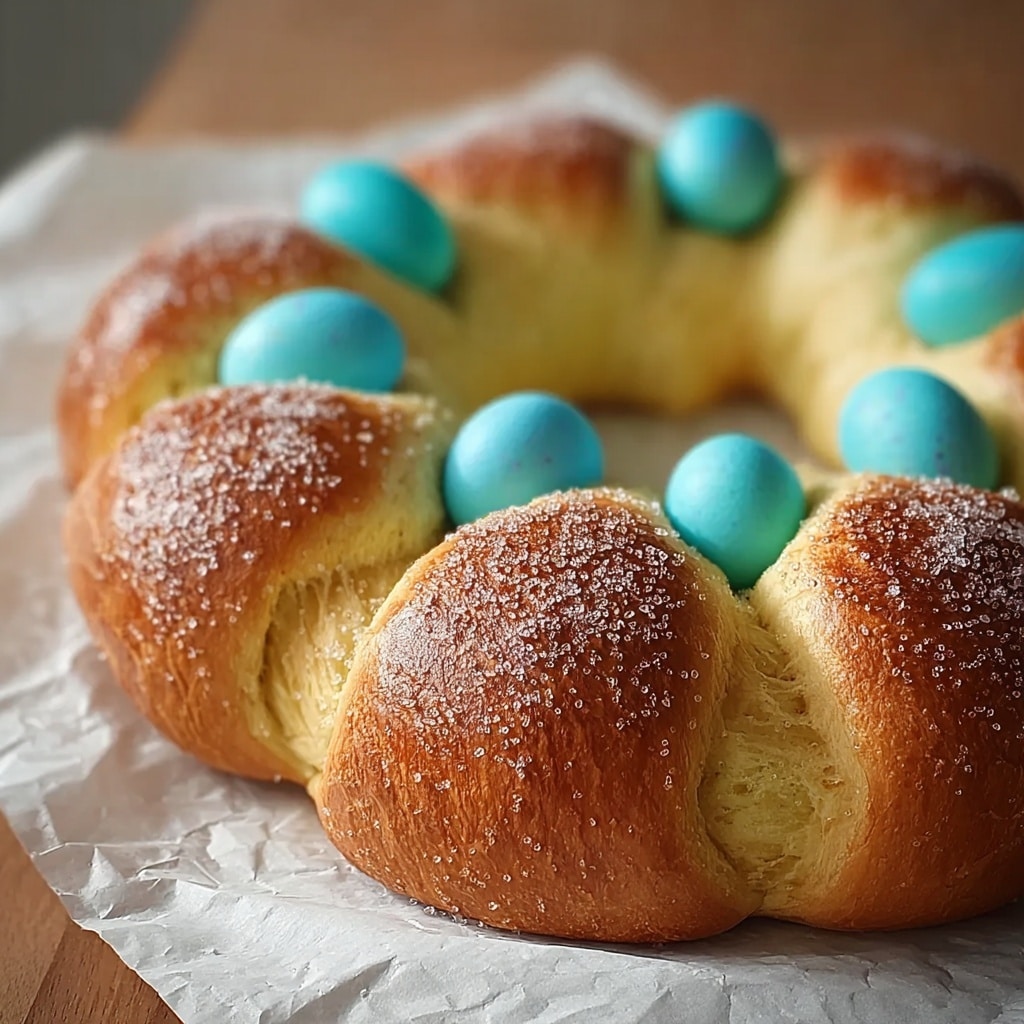
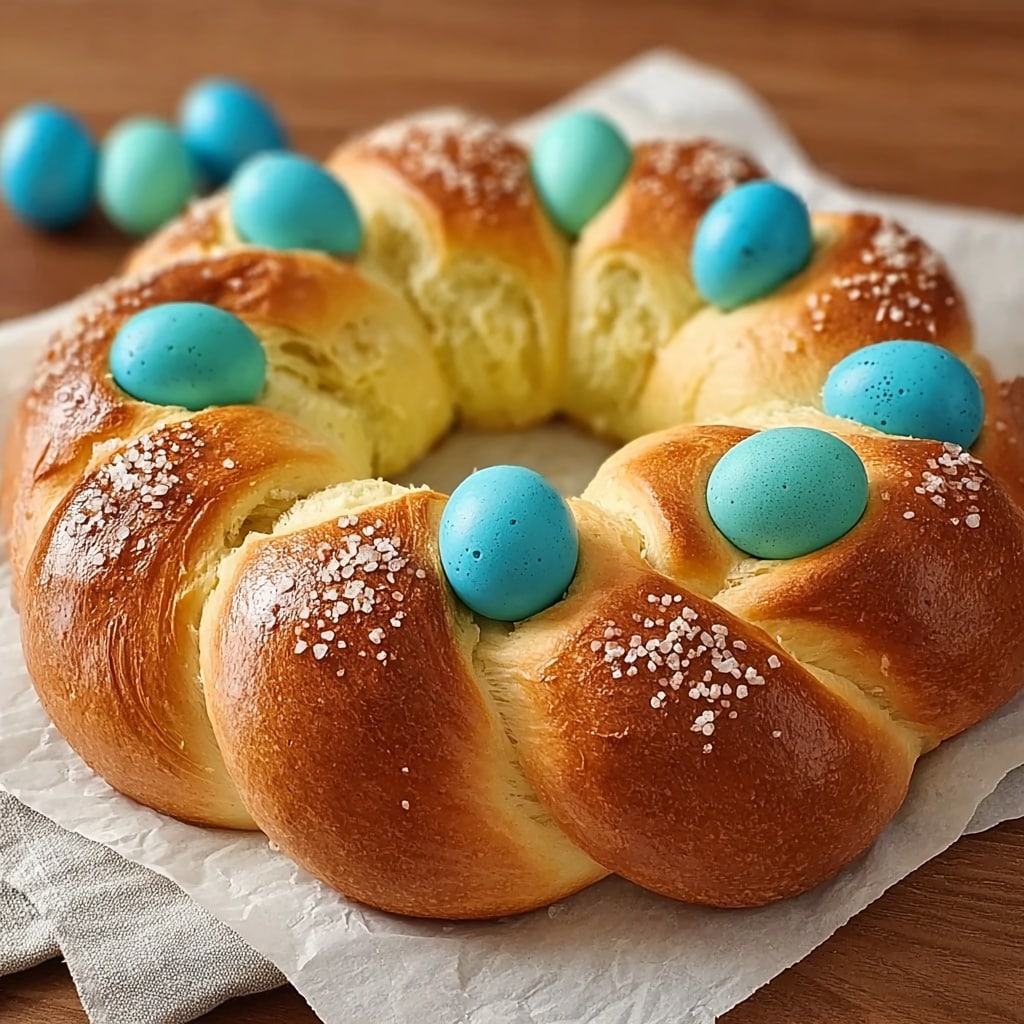
If you’ve been dreaming of a festive, sweet bread that captures the essence of spring celebrations, you have to try the Italian Easter Bread With Dyed Eggs Recipe. This beautiful, braided loaf studded with colorful dyed eggs isn’t just a feast for the eyes; it’s a delightful mix of soft, slightly sweet dough with a subtle citrus hint that brings the whole family to the table. Whether you’re honoring tradition or seeking a new holiday favorite, this bread delivers warmth, joy, and a little bit of magic in every bite.

Ingredients You’ll Need
The ingredients for this Italian Easter Bread with Dyed Eggs are wonderfully straightforward, yet each one plays an essential role in creating the perfect texture, flavor, and festive look of this bread. From the richness of butter and eggs to the gentle lift from yeast and a pop of orange zest, these simple components come together to make something truly special.
- 4 cups all-purpose flour: Provides the soft, strong structure needed for the bread’s tender yet sturdy crumb.
- 1/2 cup granulated sugar: Adds just the right amount of sweetness to balance the dough’s richness.
- 1 packet active dry yeast (2 1/4 teaspoons): Essential for that fluffy rise that makes the bread light and airy.
- 1 teaspoon salt: Enhances all the flavors and balances the sweetness beautifully.
- 1/2 cup milk, warmed to 110°F: Warms up the dough for yeast activation and enriches it with creaminess.
- 1/2 cup water, warmed to 110°F: Helps activate the yeast and keeps the dough moist without weighing it down.
- 1/4 cup unsalted butter, softened: Contributes to the tender softness and subtle buttery flavor in every bite.
- 2 large eggs: Provide richness and structure while adding a lovely color to the dough.
- 1 teaspoon vanilla extract: Delivers a warm, comforting aroma and depth of flavor.
- 1 teaspoon orange zest (optional): A bright citrus note that complements the sweet dough perfectly.
- 1/4 cup sugar (for sprinkling): Creates a gently crunchy sweetness on top after baking.
- 4-6 hard-boiled eggs, dyed in pastel colors: The true stars of the show, these eggs make the bread festive and visually stunning.
- 1 egg yolk (for egg wash): Ensures the bread bakes to a gorgeous golden brown.
How to Make Italian Easter Bread With Dyed Eggs Recipe
Step 1: Prepare the Dough
Start by activating the yeast in warm milk and water mixed with a tablespoon of sugar. The mixture should bubble and froth within 5-10 minutes—that’s your signal that the yeast is ready to work its magic in the dough. This initial step is crucial for ensuring a light, airy texture in the finished bread.
Step 2: Mix the Ingredients
In a separate bowl, combine the flour, the rest of the sugar, and salt. Then add the yeast mixture, softened butter, eggs, vanilla extract, and orange zest if using. Mix everything thoroughly—you’ll notice the dough starting to come together with a soft, sticky feel that promises a tender loaf.
Step 3: Knead the Dough
Flour your surface and get ready to knead. Dedicate 5 to 8 minutes to working the dough by hand until it becomes smooth and elastic. This kneading develops the gluten, the protein network that gives bread its perfect chew. If the dough is tacky, dust with flour little by little, but stop as soon as it doesn’t stick to your fingers.
Step 4: Shape the Bread
After letting the dough rise in a warm, covered spot until doubled, punch it down gently to release air. Divide it into three equal ropes and braid them together into a circle, then pinch the ends securely. This braided circle is the classic shape that will hold your colorful eggs perfectly.
Step 5: Add the Dyed Eggs
Carefully nestle the hard-boiled, dyed eggs into the braid, spacing them evenly or in a pattern you love. Press them gently so they hold firmly but don’t flatten the dough around them. These eggs not only add beauty but also carry on a joyful Easter tradition with every slice.
Step 6: Let the Dough Rise Again
Cover the loaf and allow it to rise for another 30 to 45 minutes until it puffs up beautifully. This second rise results in a soft, billowy bread that envelops the colorful eggs just right.
Step 7: Prepare the Egg Wash
Brush the loaf with a simple egg yolk and water mixture. This step may feel small, but it makes a huge difference—your bread’s crust will turn a glossy, glowing golden brown that’s as appetizing as the flavors inside.
Step 8: Bake the Bread
Bake your loaf at 350°F (175°C) for about 25 to 30 minutes. Keep an eye on it and look for a deep golden color and a hollow sound when you tap the bottom. This means the bread is perfectly baked, soft inside, and beautifully crisp outside.
Step 9: Cool and Serve
Let your Italian Easter Bread With Dyed Eggs cool on a wire rack before slicing. The eggs can be eaten or saved as a lovely decoration. Either way, every bite feels like a celebration of tradition and flavor—perfect for sharing with family and friends.
How to Serve Italian Easter Bread With Dyed Eggs Recipe
Garnishes
For a charming finishing touch, sprinkle a bit of colored sugar or pearl sugar on top before baking, or serve the bread alongside fresh herbs like rosemary for a subtle fragrance and a pop of green. These little accents highlight the festivity of the Italian Easter Bread With Dyed Eggs Recipe.
Side Dishes
This bread pairs wonderfully with light sides such as mixed greens drizzled with vinaigrette, fresh fruit, or a rich ricotta spread. The balance of sweet bread and savory or fresh sides makes for a perfect Easter brunch or springtime gathering.
Creative Ways to Present
Wrap the braided bread in a colorful linen and place it in a large wicker basket adorned with spring flowers for a stunning Easter table centerpiece. You can also slice it and arrange pieces on a wooden board with dyed eggs scattered around to echo the bread’s beautiful look while encouraging everyone to dig in.
Make Ahead and Storage
Storing Leftovers
Keep any leftover Italian Easter Bread With Dyed Eggs wrapped tightly in plastic wrap or stored in an airtight container at room temperature. It will stay fresh and soft for up to three days, perfect for afternoon snacks or breakfast treats.
Freezing
To extend the life of this delightful bread, freeze it after it cools completely. Wrap it well in plastic wrap and then foil or place it in a freezer-safe bag. It will maintain its freshness for up to two months.
Reheating
When you’re ready to enjoy the bread again, thaw it at room temperature, then warm it gently in the oven at 300°F (150°C) for 10-15 minutes. This reawakens the bread’s soft texture and revives that irresistible golden crust.
FAQs
Can I use regular eggs instead of dyed eggs?
Absolutely! The dyed eggs are traditional and festive, but plain hard-boiled eggs can be used for the same structural and flavorful purpose if you prefer. You might just miss a little of that lovely pop of color.
Is orange zest necessary in this recipe?
Orange zest adds a bright, fresh note that complements the sweetness of the dough wonderfully. If you don’t have it on hand, you can skip it or substitute with lemon zest for a slightly different but equally delicious flavor.
How long can I let the dough rise?
The dough should be left to rise for 1 to 1.5 hours for the first rise and 30 to 45 minutes for the second. If your kitchen is cooler, it might take a little longer. Watch for the dough to double and puff, as that’s the real indicator it’s ready.
Can I make this bread without a stand mixer?
Yes, definitely! While a mixer can make the process easier, kneading the dough by hand works perfectly and is a great way to connect with the baking process. Just be sure to knead thoroughly until the dough is smooth and elastic.
What’s the best way to dye the eggs for this bread?
Use natural or food-safe pastel egg dyes to get soft, appealing colors. Dye the eggs a day before baking and allow them to dry completely. This prevents color bleed onto the dough and keeps the eggs looking beautiful inside the bread.
Final Thoughts
There’s something truly special about crafting this Italian Easter Bread With Dyed Eggs Recipe from scratch. It’s not just a bread; it’s a celebration woven into every strand of dough, a colorful tradition, and a heartfelt way to bring family and friends together. Try it out and enjoy the radiant smiles that come with sharing such a joyous homemade creation.
Print
Italian Easter Bread With Dyed Eggs Recipe
- Prep Time: 1 hour 15 minutes
- Cook Time: 30 minutes
- Total Time: 1 hour 45 minutes
- Yield: 1 large loaf (8-10 servings)
- Category: Bread
- Method: Baking
- Cuisine: Italian
- Diet: Vegetarian
Description
This Italian Easter Bread is a festive, sweet braided loaf traditionally adorned with pastel-dyed hard-boiled eggs. Soft, slightly sweet, and enriched with butter and eggs, this bread is perfect for celebrating Easter with its beautiful presentation and delightful flavors. The dough is braided and shaped into a circle, topped with colorful eggs, and baked to a golden finish, creating a centerpiece-worthy treat.
Ingredients
Dough Ingredients
- 4 cups all-purpose flour, plus extra for kneading
- 1/2 cup granulated sugar
- 1 packet (2 1/4 teaspoons) active dry yeast
- 1 teaspoon salt
- 1/2 cup milk, warmed to 110°F
- 1/2 cup water, warmed to 110°F
- 1/4 cup unsalted butter, softened
- 2 large eggs
- 1 teaspoon vanilla extract
- 1 teaspoon orange zest (optional, for flavor)
Topping and Decoration
- 4–6 hard-boiled eggs (dyed in pastel colors for Easter)
- 1/4 cup sugar (for sprinkling)
- 1 egg yolk (for egg wash)
Instructions
- Prepare the Dough: In a large bowl, combine the warm milk, warm water, and 1 tablespoon of sugar. Sprinkle the yeast over the mixture and let it sit for about 5-10 minutes until it becomes frothy, indicating the yeast is active.
- Mix the Ingredients: In a separate large bowl, whisk together the flour, remaining sugar, and salt. Add the yeast mixture, softened butter, eggs, vanilla extract, and optional orange zest. Mix everything until the dough begins to come together into a shaggy mass.
- Knead the Dough: Turn the dough onto a floured surface and knead for 5-8 minutes until it is smooth and elastic. If the dough is too sticky, sprinkle in a little more flour as needed. Place the dough in a greased bowl, cover with a clean towel, and let it rise in a warm place for 1 to 1.5 hours until doubled in size.
- Shape the Bread: Punch down the risen dough and divide it into three equal portions. Roll each portion into a long rope about 12-15 inches long. Braid the three ropes together and form the braid into a circular shape, pinching the ends together to seal.
- Add the Dyed Eggs: Gently press the hard-boiled, dyed eggs into the dough braid evenly. Arrange them symmetrically or in your preferred pattern, making sure they are securely nestled so they don’t fall out during baking.
- Let the Dough Rise Again: Cover the braided loaf with a clean towel and let it rise for another 30-45 minutes, or until it has puffed up noticeably.
- Prepare the Egg Wash: In a small bowl, whisk together the egg yolk with a tablespoon of water. Brush this mixture evenly over the entire loaf to help achieve a beautiful golden color while baking.
- Bake the Bread: Preheat your oven to 350°F (175°C). Place the bread on a parchment-lined baking sheet and bake for 25-30 minutes. The bread should be golden brown on top and sound hollow when tapped on the bottom, indicating it is fully baked.
- Cool and Serve: Remove the bread from the oven and let it cool completely on a wire rack. Once cooled, slice and serve. The dyed eggs can be eaten with the bread or kept as a decorative element for the Easter celebration.
Notes
- Ensure liquids are warmed to about 110°F to activate the yeast without killing it.
- Using orange zest adds a subtle citrus flavor that complements the sweetness of the bread but can be omitted if preferred.
- The dyed eggs can be stored separately if you want to keep them as decorations rather than eating them together with the bread.
- If the dough feels too sticky when kneading, add extra flour gradually—you want a soft but workable dough.
- Let the dough rise in a warm, draft-free environment for best results.