
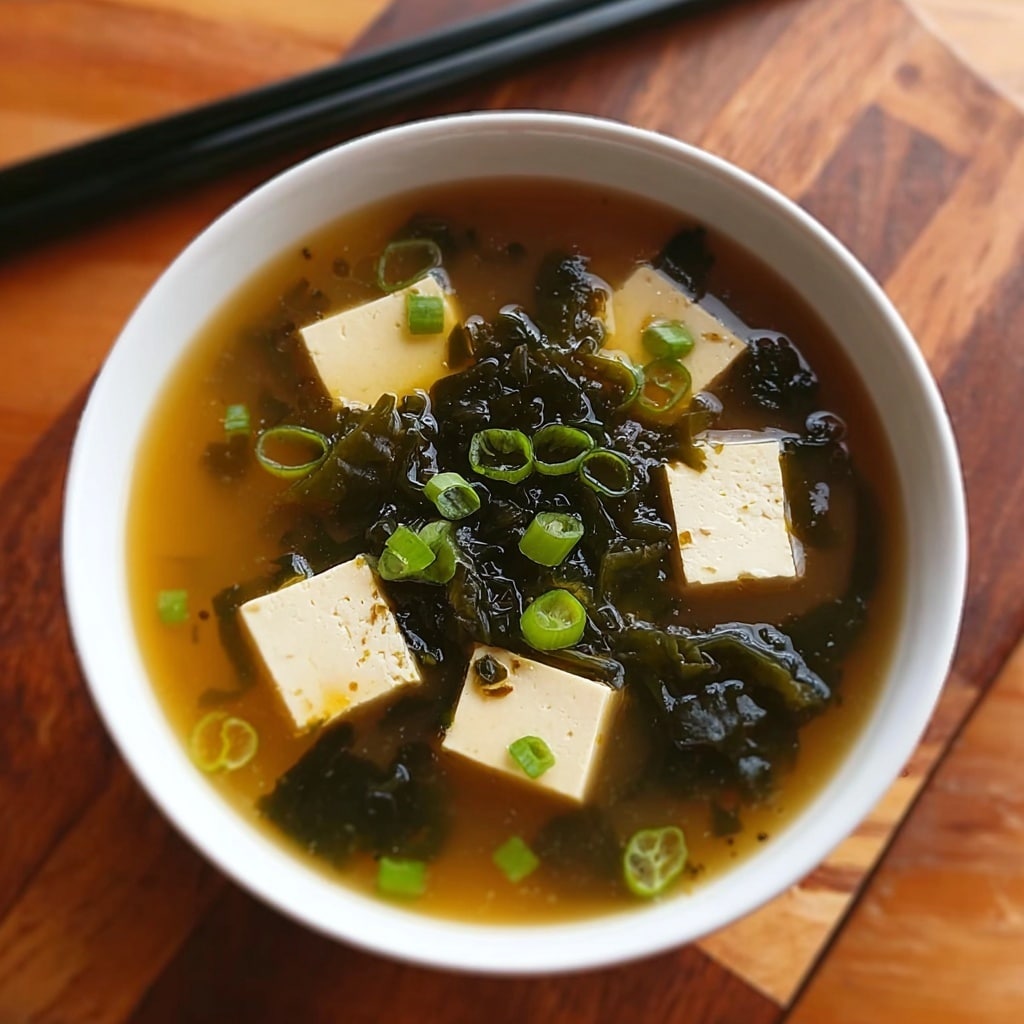
If you’ve ever craved a warm, comforting bowl of traditional Japanese soup that’s both nourishing and incredibly simple to make, let me introduce you to this delightful Homemade Miso Soup with Tofu Recipe. Bursting with umami, silky tofu, and the subtle salty sweetness of miso, this soup perfectly balances warmth and freshness. It’s a quick go-to that feels both special and utterly satisfying, whether you’re starting a meal or enjoying a quiet moment of comfort.

Ingredients You’ll Need
Even though this recipe calls for just a handful of ingredients, each one plays a crucial role in delivering authentic flavor and texture. From the oceanic depth of kombu to the gentle creaminess of tofu, these essentials come together effortlessly to create a truly memorable dish.
- 4 cups water: The base for your dashi broth, creating that delicate and clear soup foundation.
- 1 piece kombu (dried kelp): Adds natural umami and a subtle mineral richness, making the broth savory and satisfying.
- 1 cup katsuobushi (dried bonito flakes): Infuses a smoky, fishy essence that deepens the broth’s flavor—skip if you want a vegetarian version.
- 7 oz soft/silken tofu (kinugoshi dofu): Provides a smooth, tender texture that beautifully absorbs the miso’s savory notes.
- 4 Tbsp miso paste: The soul of the soup, delivering that iconic salty, earthy, and slightly sweet Japanese flavor.
- 1 Tbsp dried wakame seaweed: Rehydrates into tender, slightly chewy pieces, adding a lovely pop of color and taste.
- 1 green onion/scallion: Thinly sliced for a fresh, sharp contrast that brightens the soup beautifully.
How to Make Homemade Miso Soup with Tofu Recipe
Step 1: Prepare the Dashi Broth
This step is where the magic begins. Combine 4 cups of water and the piece of kombu in a saucepan, and slowly bring it to a gentle boil. Just before it starts boiling vigorously, remove the kombu to avoid bitterness. If you’re not making a vegetarian soup, add the katsuobushi (bonito flakes) to the hot water, and let it simmer briefly to release a rich, smoky aroma, then strain to keep your broth crystal clear. This dashi is the essence that elevates your miso soup to restaurant-quality deliciousness.
Step 2: Add Miso and Tofu
Once your dashi broth is ready and still warm but not boiling, it’s time to incorporate the miso paste. Dissolve the miso by stirring it gently into the broth, ensuring you don’t boil the mixture at this point, as high heat can kill the delicate flavors and beneficial enzymes. Next, add the soft tofu, carefully cutting it into cubes or bite-sized pieces beforehand, and let it warm gently within the broth, soaking up all the savory goodness.
Step 3: Incorporate Seaweed and Green Onion
Sprinkle in the dried wakame seaweed, which will quickly rehydrate and bring a satisfying texture to the soup. Finish by adding the thinly sliced green onion rounds, which provide a beautiful pop of vibrant green and a fresh, slightly peppery note. The soup is ready to serve the moment the wakame softens and all the ingredients are well combined.
How to Serve Homemade Miso Soup with Tofu Recipe
Garnishes
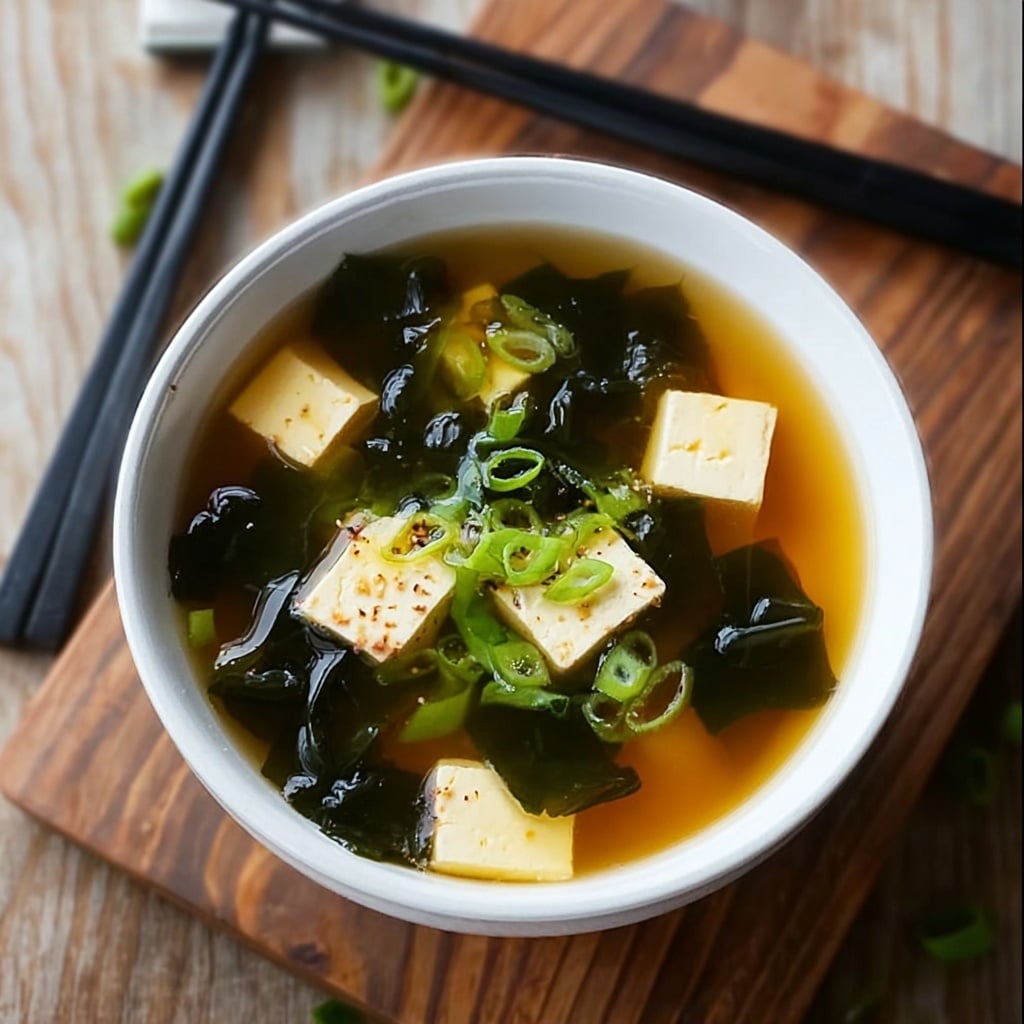
You can keep it simple or elevate the presentation with delicate garnishes. A few extra scallion slices on top offer a fresh crunch and color. Toasted sesame seeds can add a nutty hint, while a small drizzle of chili oil or a sprinkle of shichimi togarashi (Japanese seven-spice) adds a tempting kick for adventurous palates.
Side Dishes
Homemade Miso Soup with Tofu Recipe is a fantastic starter alongside sushi, tempura, or grilled fish. Pair it with a bowl of steamed rice and pickled vegetables for an authentically satisfying Japanese-inspired meal that feels balanced and nourishing.
Creative Ways to Present
Present your soup in lovely lacquer bowls or simple ceramic dishes to enhance the comforting vibe. For a fun twist, float delicate edible flowers or microgreens for a touch of elegance. Serving miso soup in small cups alongside a bentō box of various small dishes is also a charming way to enjoy it.
Make Ahead and Storage
Storing Leftovers
If you happen to have leftover miso soup, store it in an airtight container in the refrigerator for up to two days. Keep in mind, tofu and seaweed can change texture over time, so it’s best consumed relatively quickly for the freshest experience.
Freezing
Freezing miso soup is generally not recommended because the tofu and seaweed tend to become mushy and lose their pleasant texture. For best results, enjoy this soup fresh or refrigerate leftovers instead of freezing.
Reheating
When reheating, gently warm the soup in a saucepan over low heat. Avoid boiling to preserve the miso paste’s delicate flavors and the tofu’s soft texture. Stir occasionally to ensure even warmth without breaking apart the ingredients.
FAQs
Can I use instant dashi powder instead of making dashi from scratch?
Absolutely! Instant dashi powder is a convenient shortcut that still provides great flavor. Just dissolve the powder in hot water according to package instructions and proceed with the recipe as usual.
Is this Homemade Miso Soup with Tofu Recipe vegetarian or vegan?
The traditional recipe uses bonito flakes, which are fish-based, so it’s not vegetarian or vegan as is. However, if you skip the bonito flakes and use kombu dashi only, it becomes a delicious vegetarian and vegan-friendly soup.
What type of miso paste should I use?
There are different miso varieties, but light (white) miso works wonderfully here because it’s milder and sweeter, perfect for gentle tofu soup. Feel free to experiment with red or mixed miso for deeper, more intense flavors.
Can I add other vegetables to the soup?
Sure! While traditional miso soup is simple, you can add sliced mushrooms, carrots, or daikon radish to increase both flavor and nutrition. Just keep in mind that cooking times for other veggies may vary.
How do I prevent the tofu from breaking apart?
Gently cut the silken tofu into larger chunks and add it to the broth carefully. Stir the soup slowly and avoid boiling it after adding tofu to maintain those delicate cubes intact.
Final Thoughts
There’s something truly heartwarming about making and sharing this Homemade Miso Soup with Tofu Recipe. It’s simple, quick, and packed with flavors that feel both timeless and cozy. Whether you’re crafting it as an elegant starter or a soothing meal for yourself on a chilly day, it promises to bring comforting joy in every spoonful. Give it a try—you just might find your new favorite soup to revisit again and again!
Print
Homemade Miso Soup with Tofu Recipe
- Prep Time: 10 minutes
- Cook Time: 10 minutes
- Total Time: 20 minutes
- Yield: 4 servings
- Category: Soup
- Method: Stovetop
- Cuisine: Japanese
- Diet: Vegetarian
Description
This homemade miso soup with tofu is a traditional Japanese comfort food that combines a savory dashi broth with soft silken tofu, wakame seaweed, and fresh green onions. This easy-to-make soup is perfect for a light meal or appetizer and delivers authentic umami flavor with simple ingredients and minimal prep time.
Ingredients
Dashi Broth
- 4 cups water
- 1 piece kombu (dried kelp) (⅓ oz, 10 g; 4 x 4 inches or 10 x 10 cm)
- 1 cup katsuobushi (dried bonito flakes) (packed; about 3 cups loosely packed for stronger flavor)
Miso Soup
- 7 oz soft/silken tofu (kinugoshi dofu)
- 4 Tbsp miso paste (use 1 Tbsp or 18 g per 1 cup/240 ml dashi)
- 1 Tbsp dried wakame seaweed
- 1 green onion/scallion, thinly sliced
Instructions
- Prepare the Dashi Broth: Add 4 cups of water and 1 piece of kombu to a saucepan. Slowly bring to a gentle boil over medium heat. Just before boiling, remove the kombu from the water and set it aside. If you are not preparing a vegetarian broth, add 1 cup of katsuobushi (dried bonito flakes) to the pot, simmer for a few minutes, then strain the broth to remove the flakes, leaving a clear, flavorful dashi.
- Prepare the Ingredients: While the dashi is simmering, cut the soft/silken tofu into cubes and thinly slice the green onion/scallion. Rehydrate dried wakame seaweed by soaking it briefly in water if desired.
- Make the Miso Soup: Pour the prepared dashi broth back into a clean pot and bring it to a slow boil over medium-low heat. Dissolve 4 tablespoons of miso paste into the hot broth by adding it gradually and stirring gently to avoid clumps. Add the cubed tofu, rehydrated wakame seaweed, and sliced green onions to the pot. Warm the soup gently without boiling to preserve the delicate flavor of the miso.
- Serve: Once everything is heated through, ladle the miso soup into bowls and serve immediately for the best flavor and texture.
Notes
- Do not boil miso soup after adding the miso paste as high heat can destroy its beneficial enzymes and alter the flavor.
- Adjust the amount of miso to taste; some prefer a stronger umami flavor while others like it milder.
- Kombu and bonito flakes can be found at Asian grocery stores or online specialty food retailers.
- Use soft or silken tofu for a smooth texture; firm tofu will alter the soup’s feel.
- The dashi broth can be made in advance and refrigerated for up to 2 days or frozen for longer storage.